■ The World Through Japanese Art: Cross-Cultural Understanding and New Discoveries
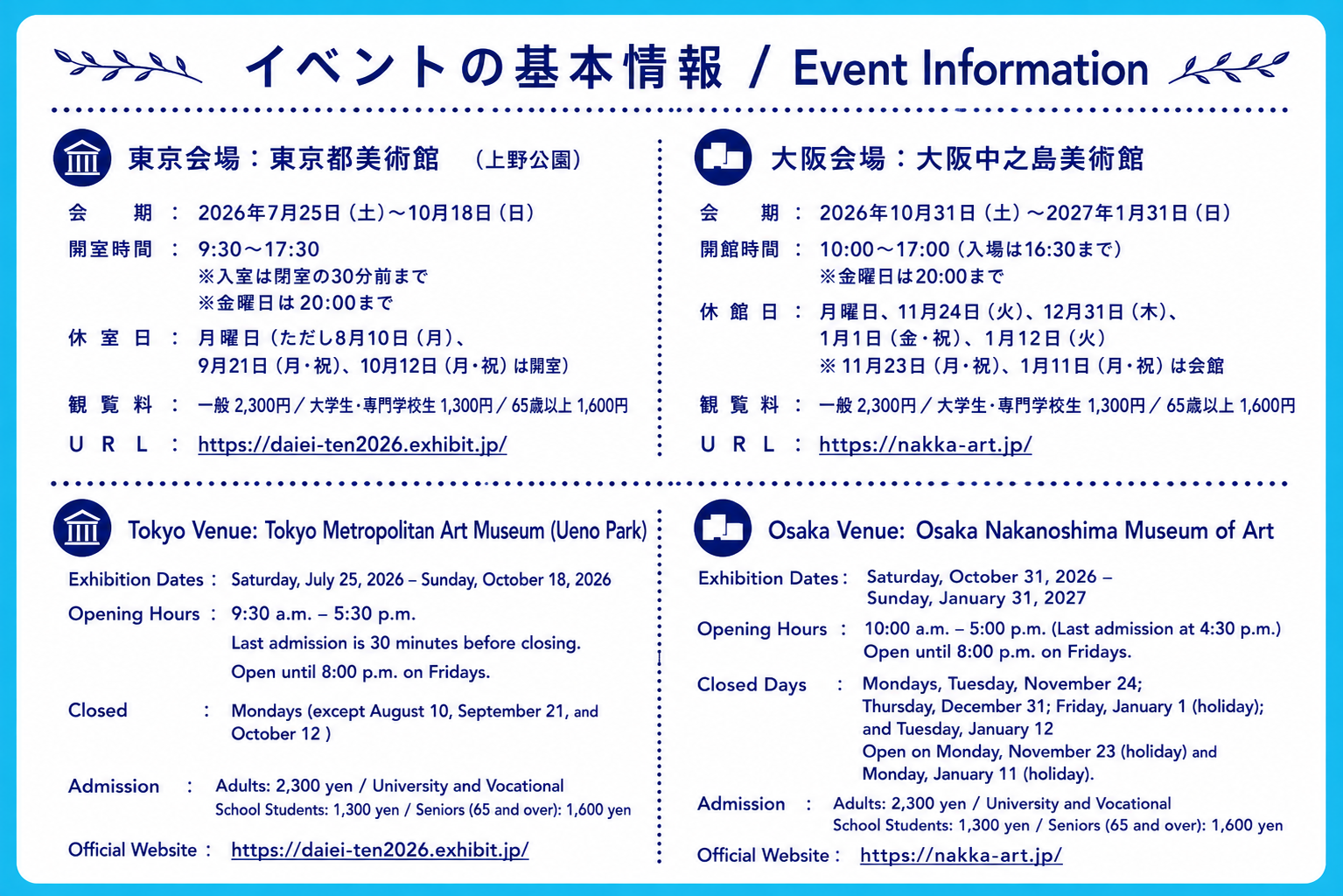
To commemorate its 100th anniversary, the Tokyo Metropolitan Art Museum is currently hosting Edo in Focus: Japanese Treasures from the British Museum. Through the remarkable Japanese artworks in the British Museum’s collection, this exhibition offers an opportunity to explore the daily lives, stories, imagination, and rich artistic expression of people during the Edo period.
When it comes to art, some people may feel that it seems difficult or requires expert knowledge. However, simply paying a little attention to the background of a work or what is depicted can reveal the stories people enjoyed in those days, the artist’s sense of humor and creativity, as well as sensibilities that still resonate with us today.
Another important thing to remember is that appreciating art is not about finding the "correct" answer. By using your imagination to think about the people, animals, and stories depicted in each work, art becomes more accessible, personal, and enjoyable.
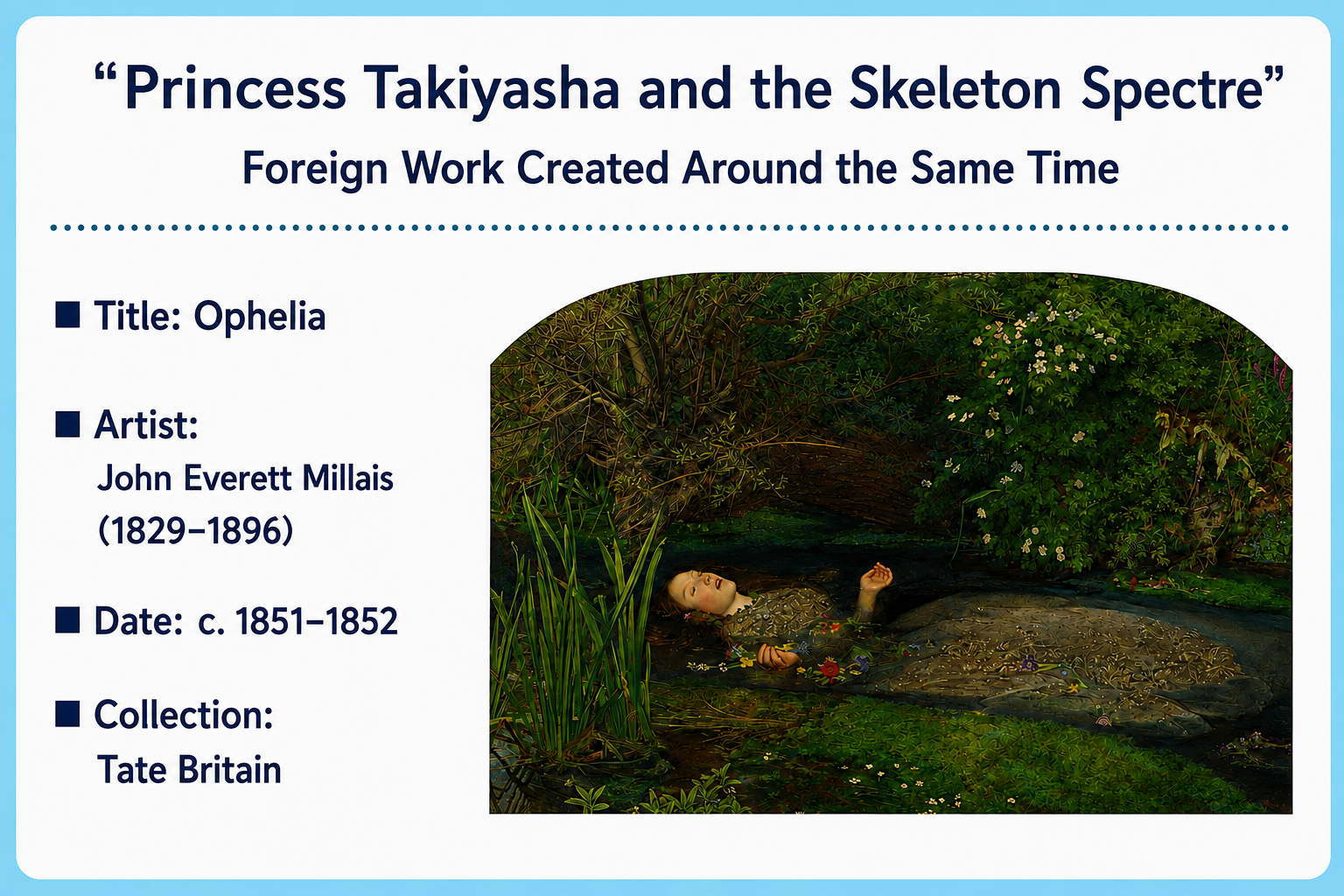
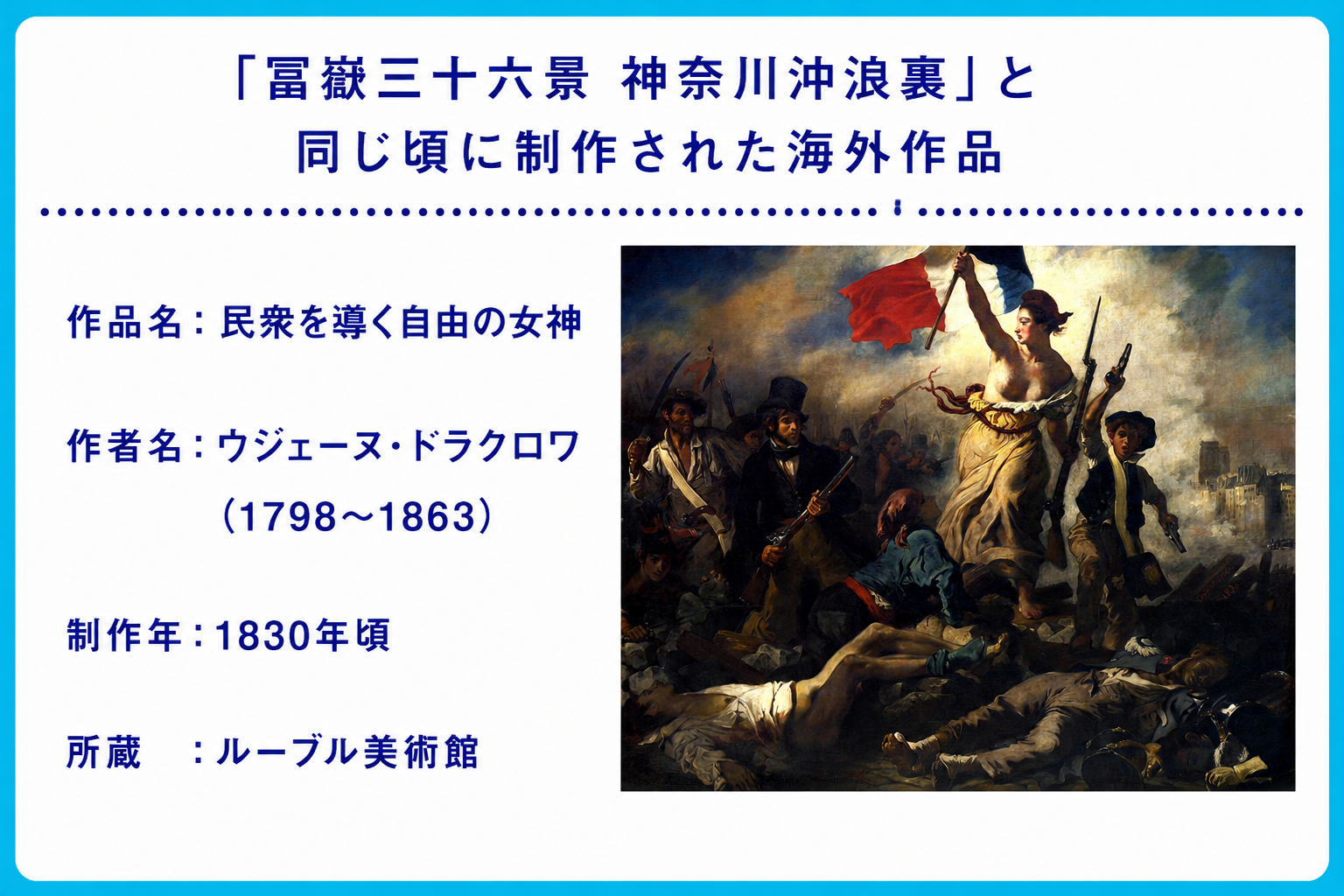
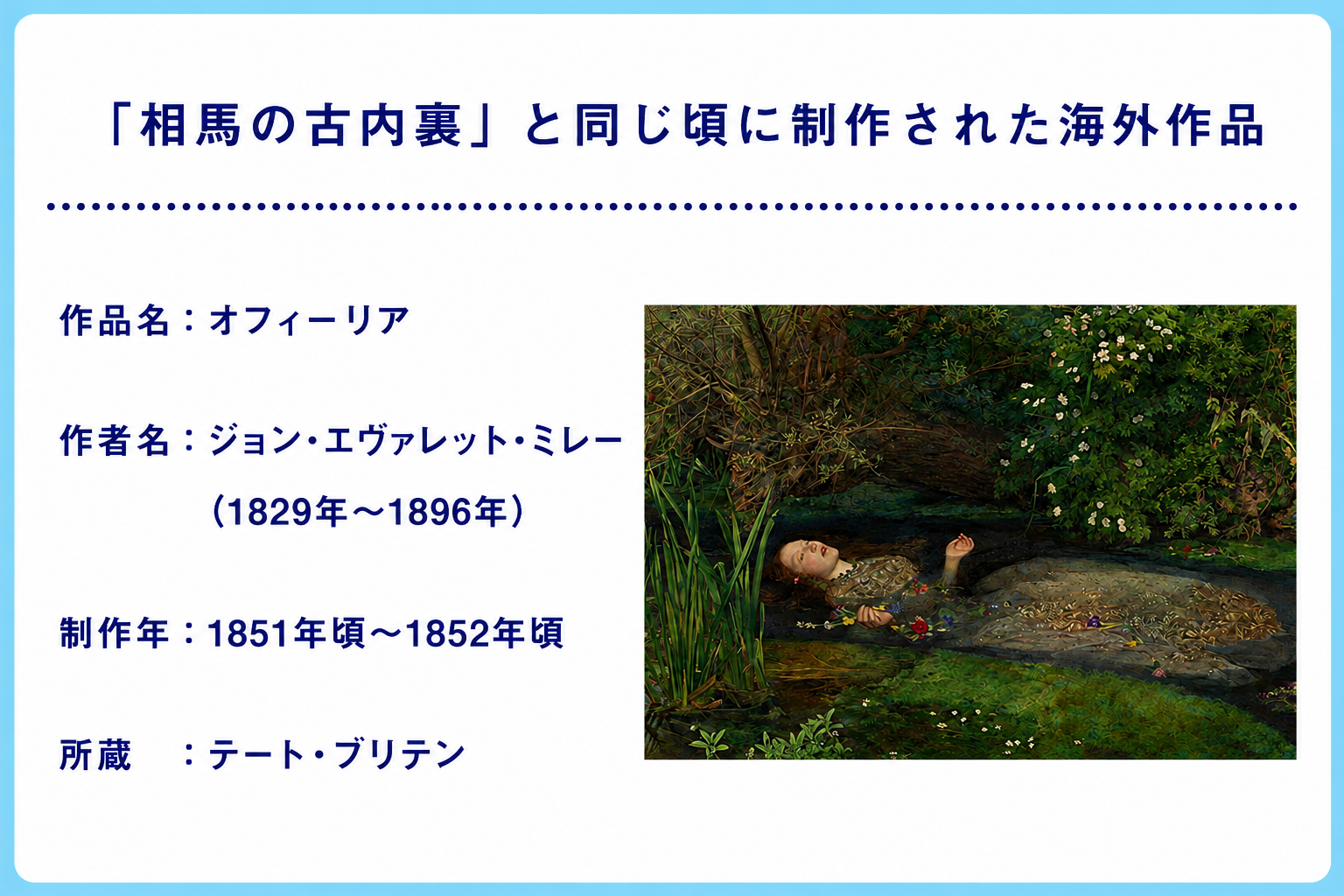
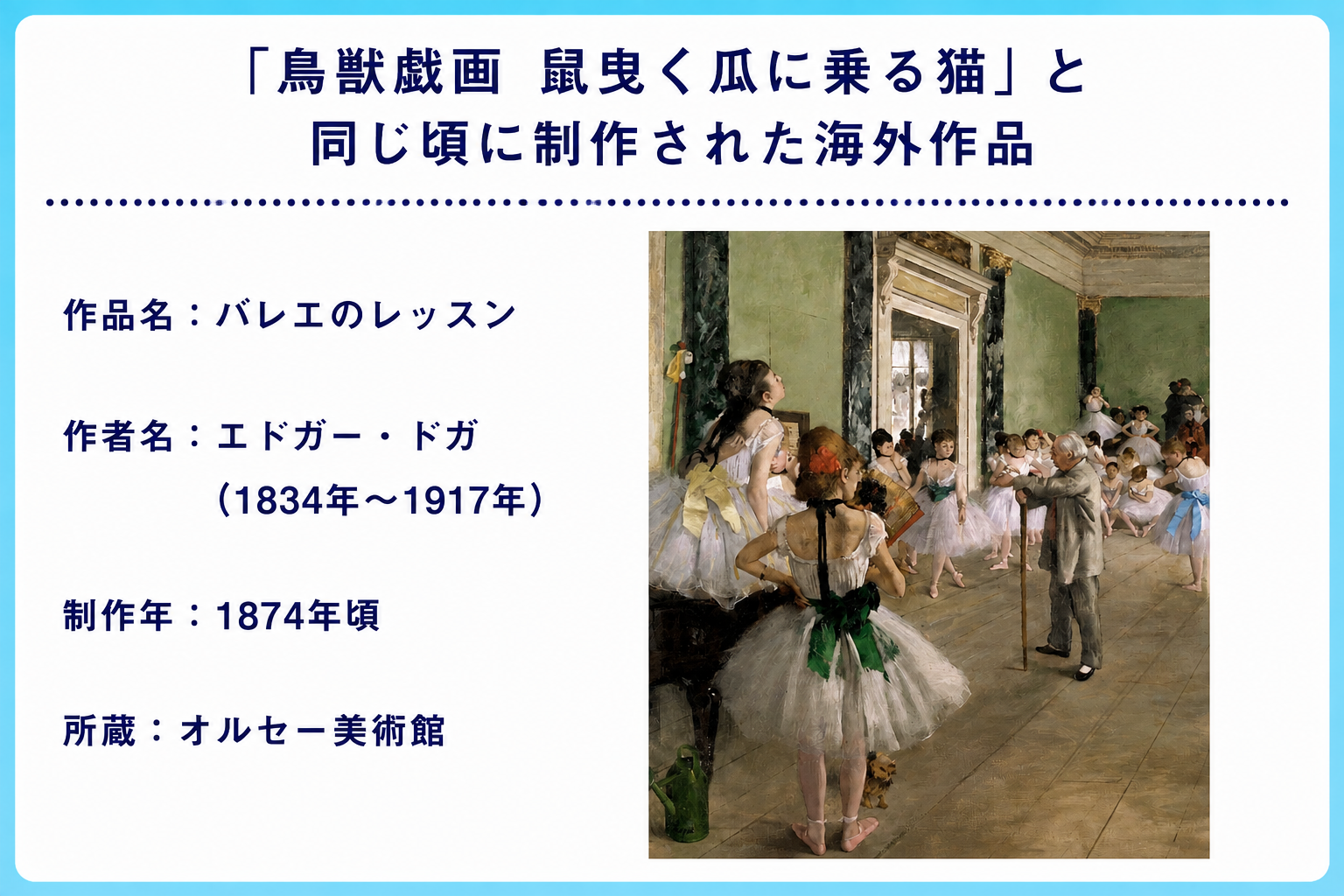
In this article, we introduce three works recommended by the cross the border staff, along with famous masterpieces from around the world created around the same period. By comparing Japanese and international art and exploring the different historical and cultural backgrounds in which these works were created, we hope this article provides an opportunity for you to gain new perspectives and deepen your understanding of different cultures through art.
■ cross the border staffがおすすめする3作品
Three Works Recommended by the cross the border staff
【 1 】
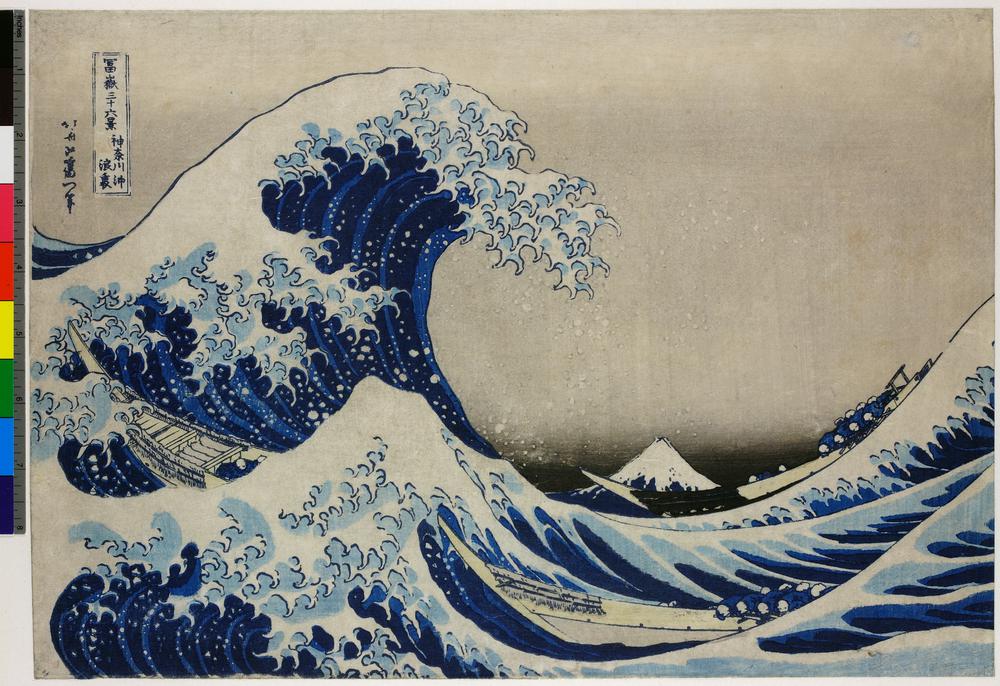
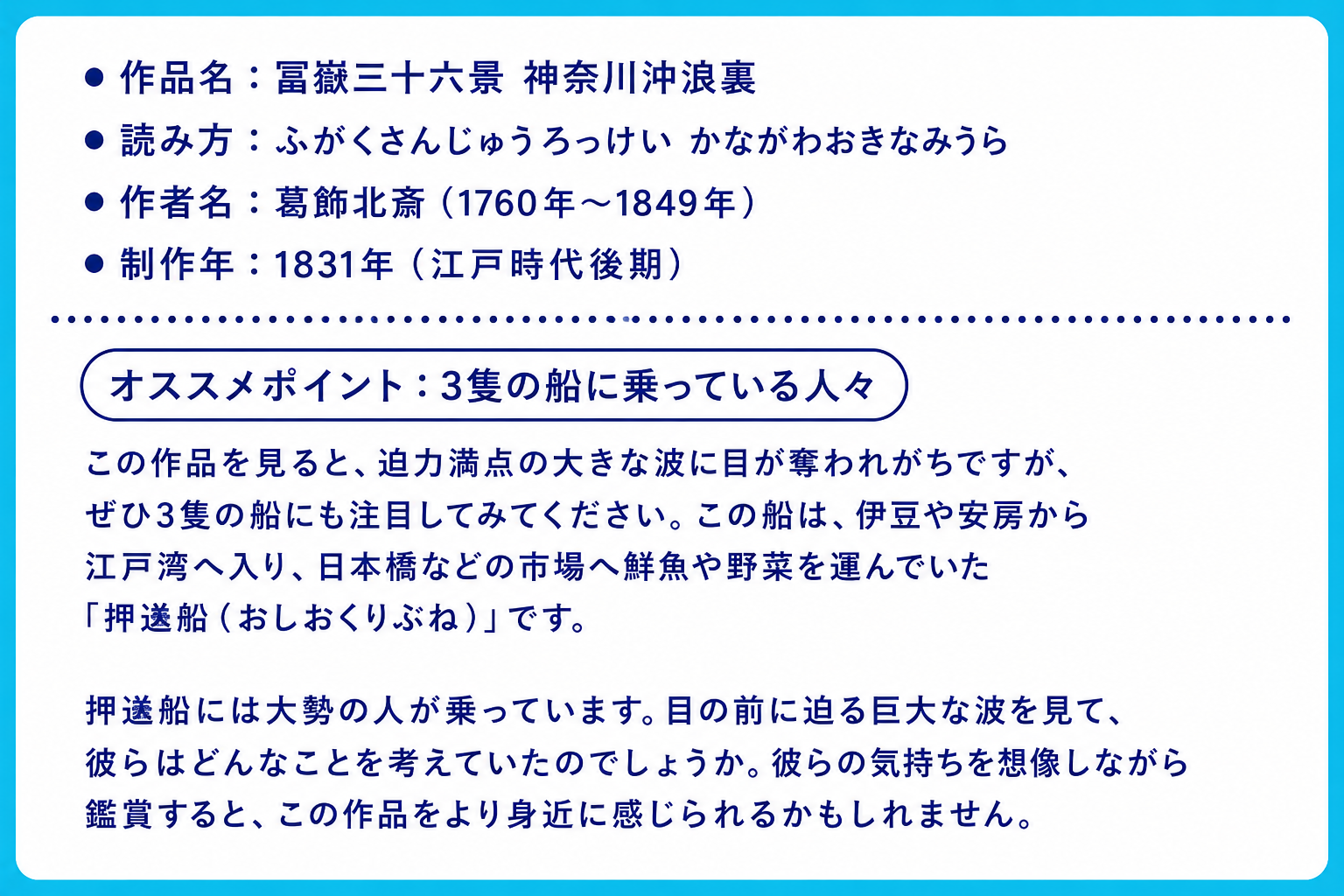
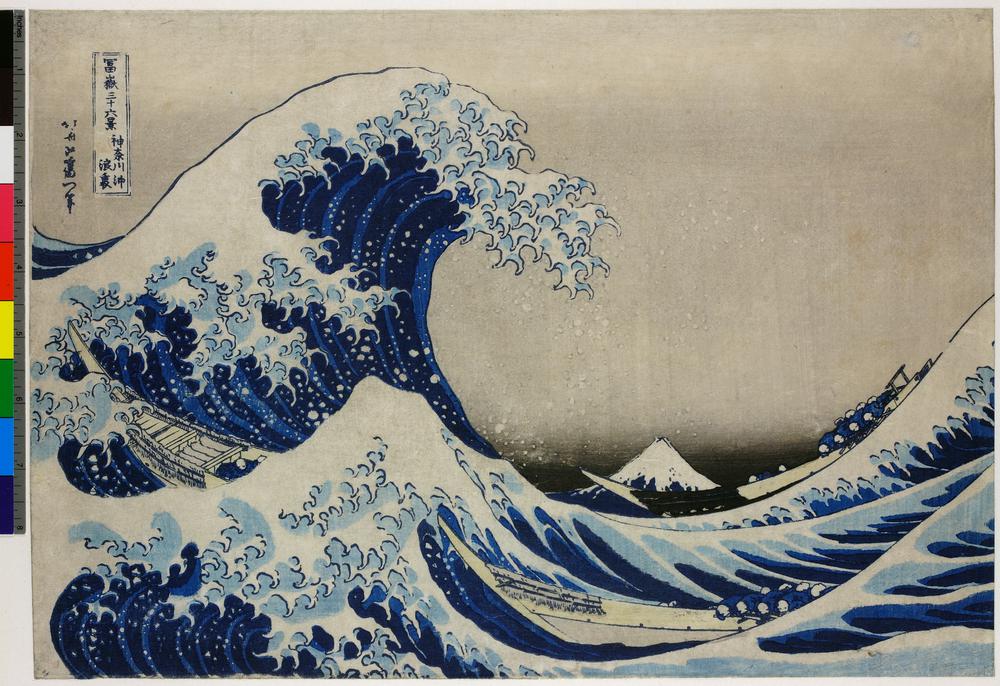
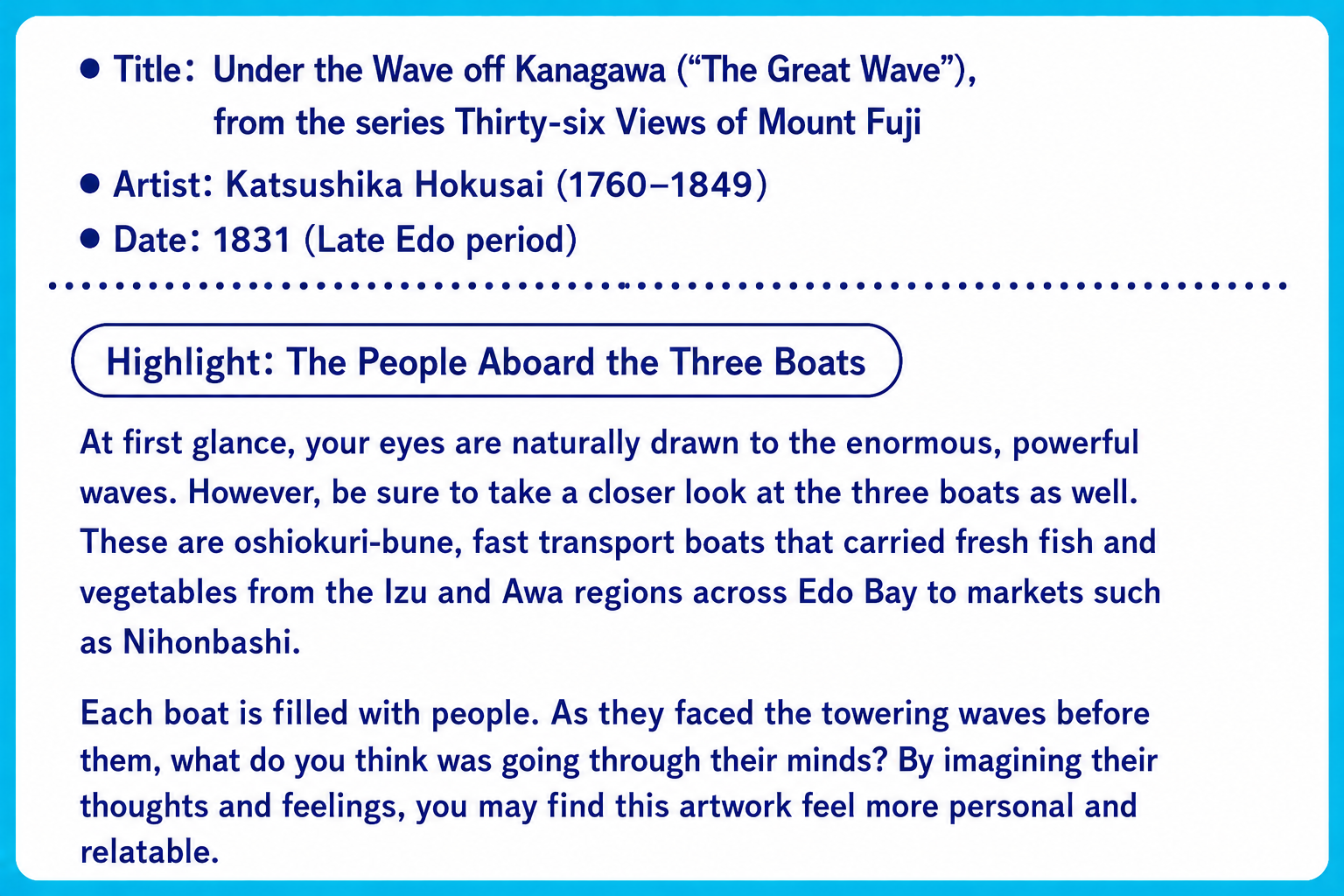
Title: Under the Wave off Kanagawa (“The Great Wave”), from the series Thirty-six Views of Mount Fuji
Artist: Katsushika Hokusai (1760–1849)
Date: 1831 (Late Edo period)
British Museum:https://www.britishmuseum.org/collection/object/A_2008-3008-1
Cultural Heritage Online:https://online.bunka.go.jp/heritages/detail/246760
Highlight: The People Aboard the Three Boats
At first glance, your eyes are naturally drawn to the enormous, powerful waves. However, be sure to take a closer look at the three boats as well. These are oshiokuri-bune, fast transport boats that carried fresh fish and vegetables from the Izu and Awa regions across Edo Bay to markets such as Nihonbashi.
Each boat is filled with people. As they faced the towering waves before them, what do you think was going through their minds? By imagining their thoughts and feelings, you may find this artwork feel more personal and relatable.
【 2 】
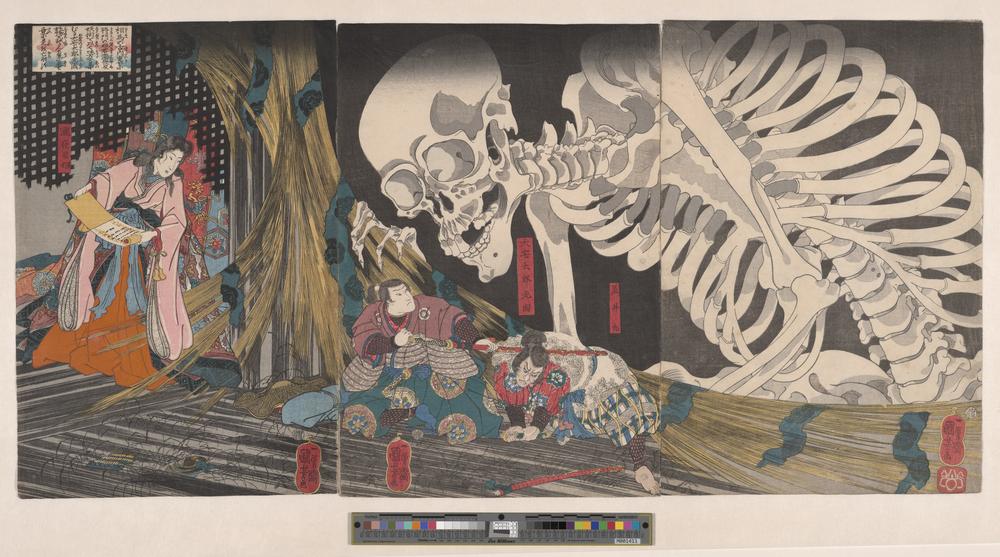
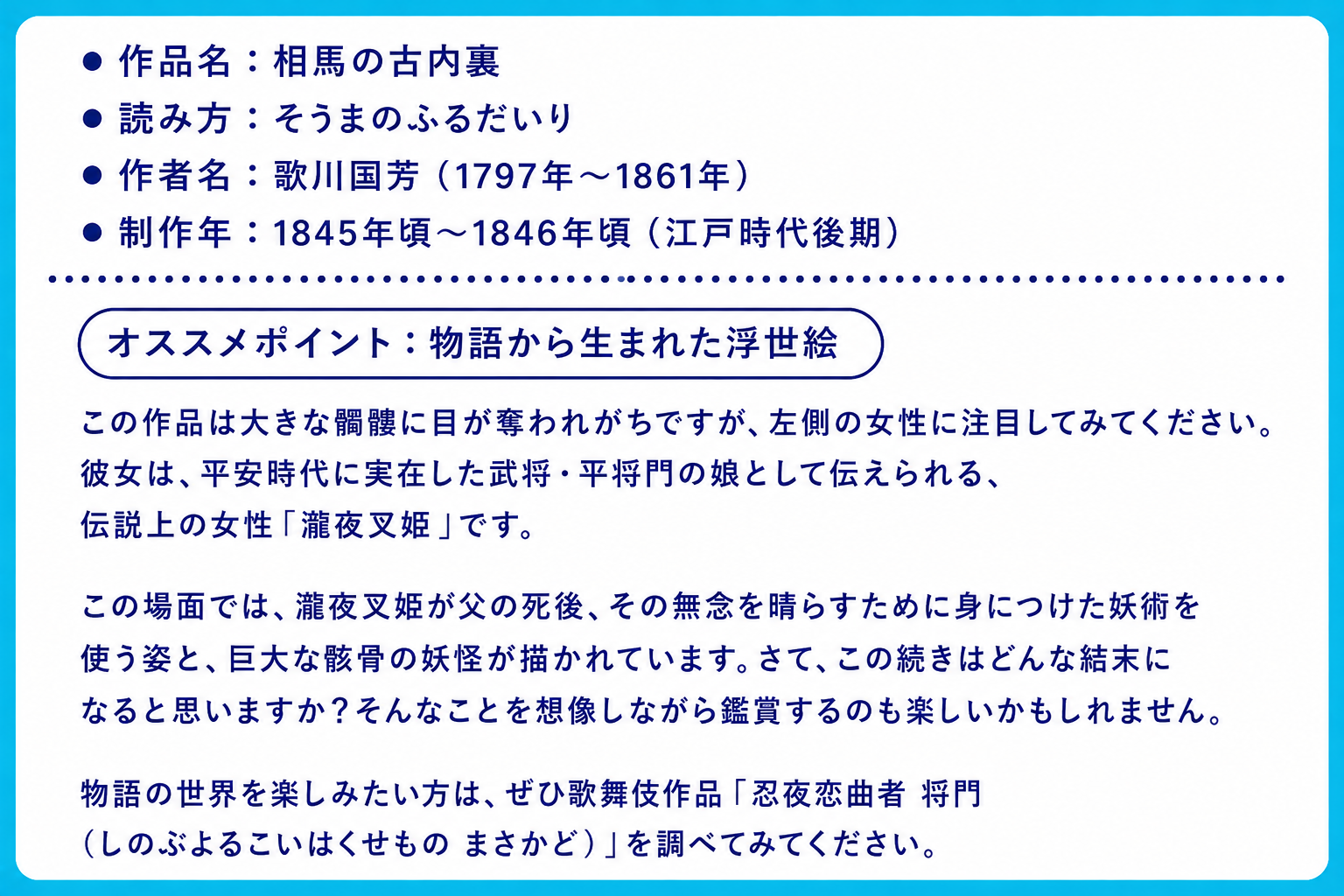
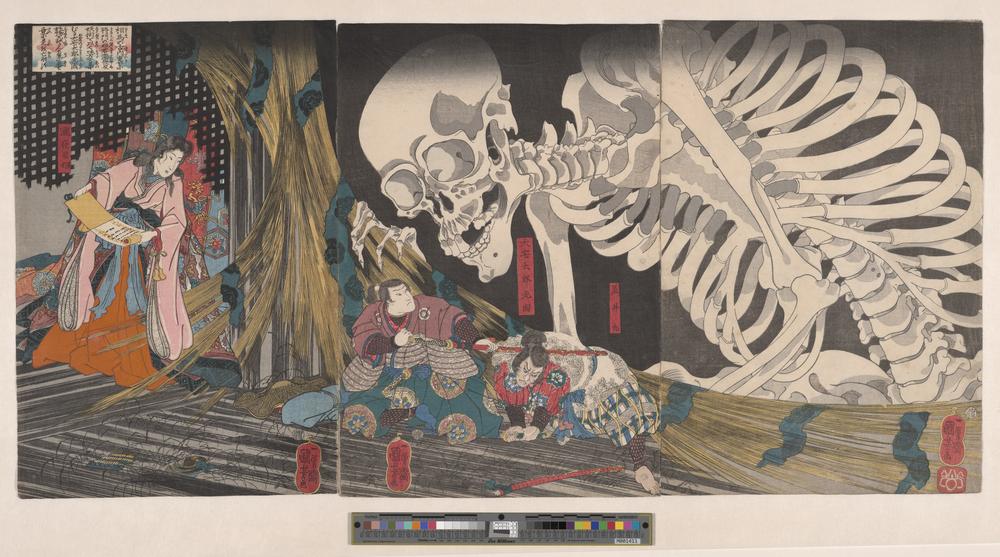
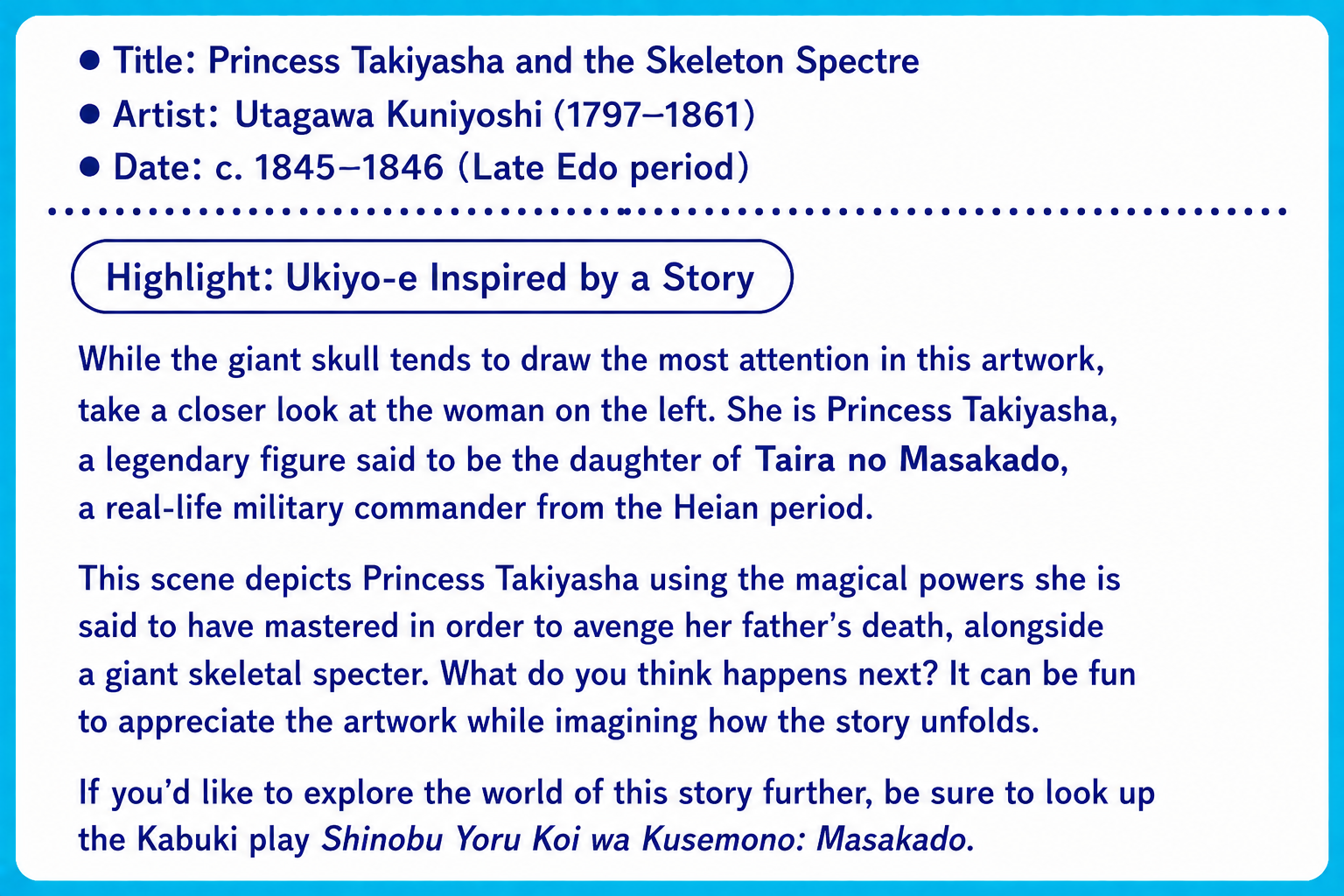
Title: Princess Takiyasha and the Skeleton Spectre
Artist: Utagawa Kuniyoshi (1797–1861)
Date: c. 1845–1846 (Late Edo period)
British Museum:https://www.britishmuseum.org/collection/object/A_1915-0823-0-915-916
Highlight: Ukiyo-e Inspired by a Story
While the giant skull tends to draw the most attention in this artwork, take a closer look at the woman on the left. She is Princess Takiyasha, a legendary figure said to be the daughter of Taira no Masakado, a real-life military commander from the Heian period.
This scene depicts Princess Takiyasha using the magical powers she is said to have mastered in order to avenge her father's death, alongside a giant skeletal specter. What do you think happens next? It can be fun to appreciate the artwork while imagining how the story unfolds.
If you'd like to explore the world of this story further, be sure to look up the Kabuki play Shinobu Yoru Koi wa Kusemono: Masakado.
【 3 】
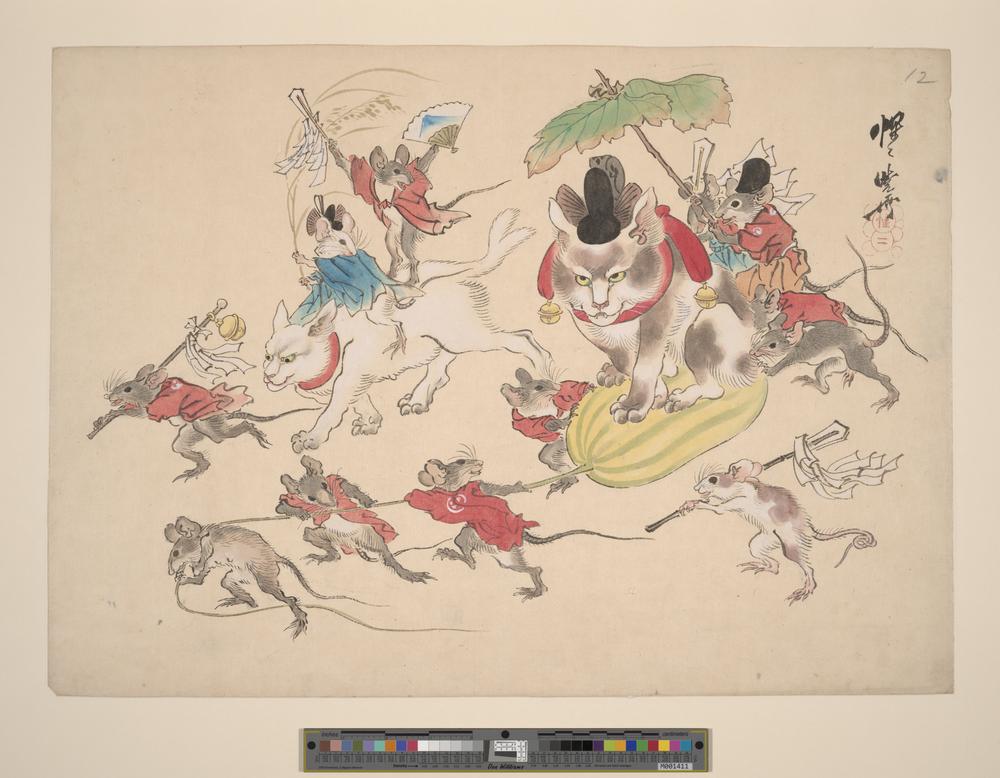
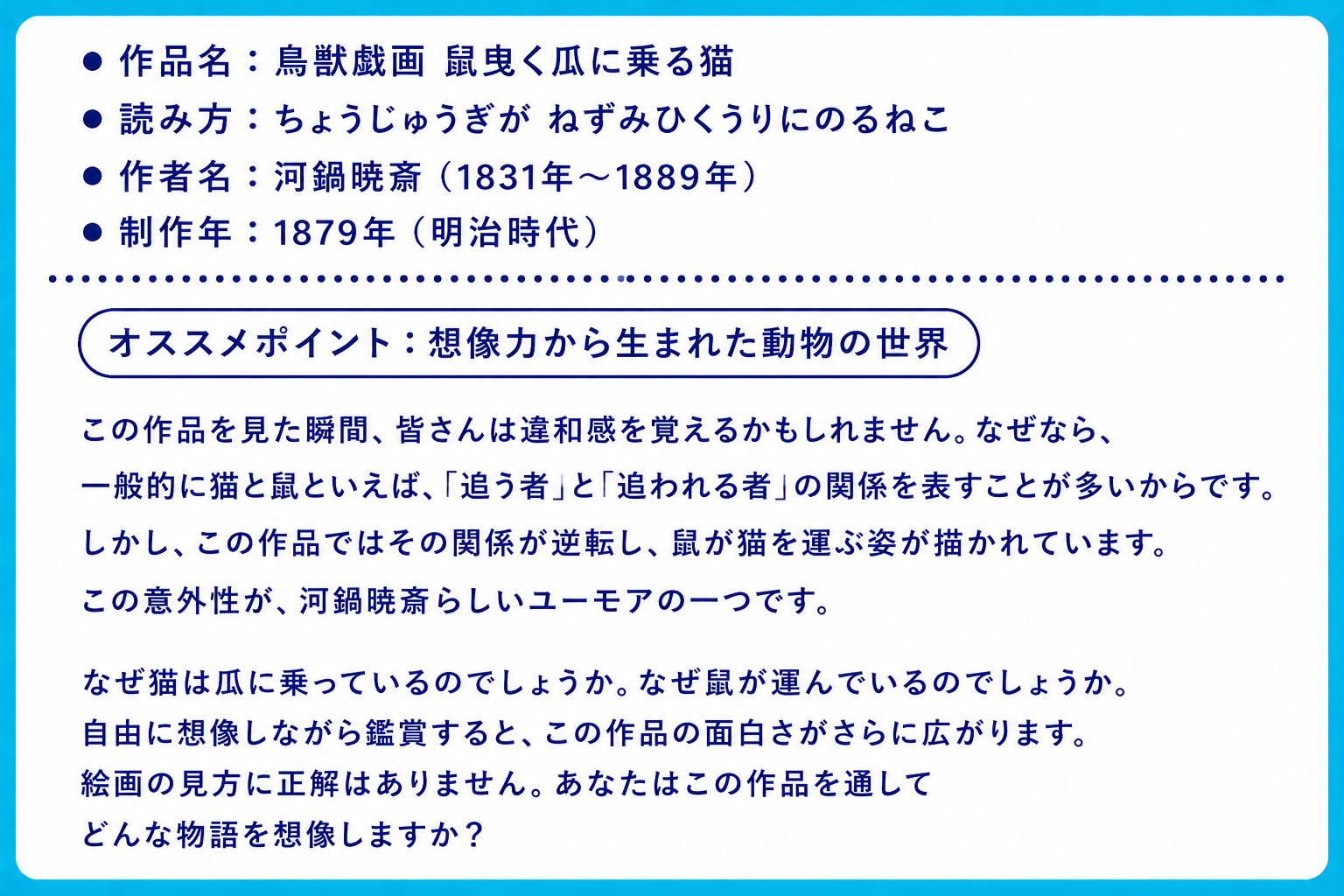
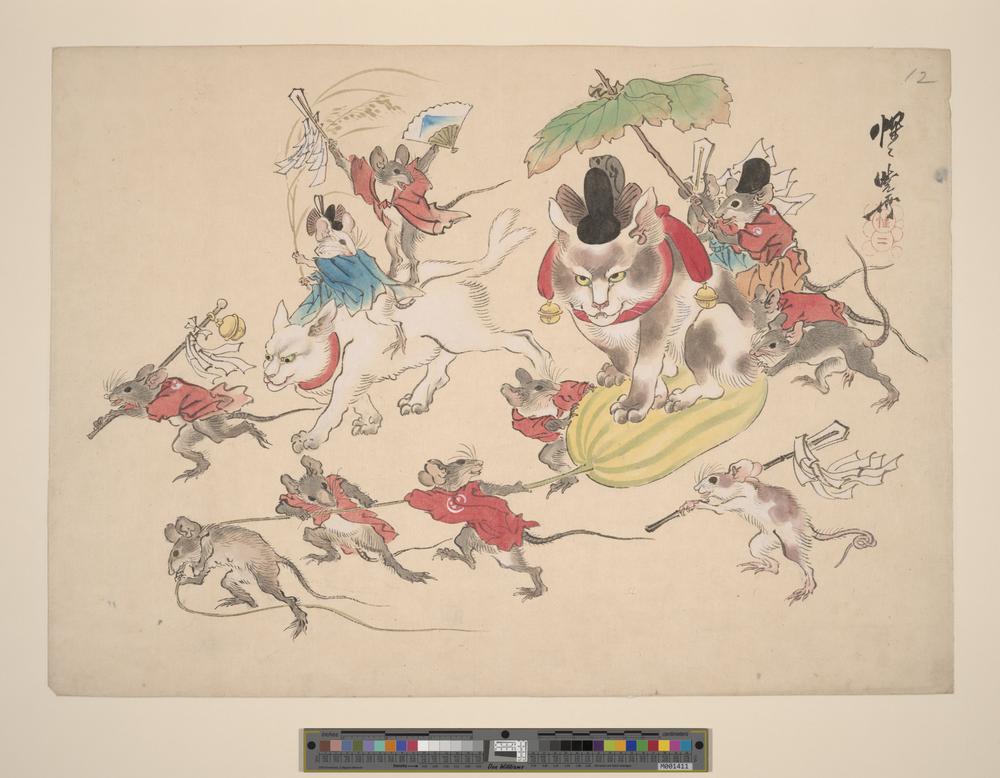
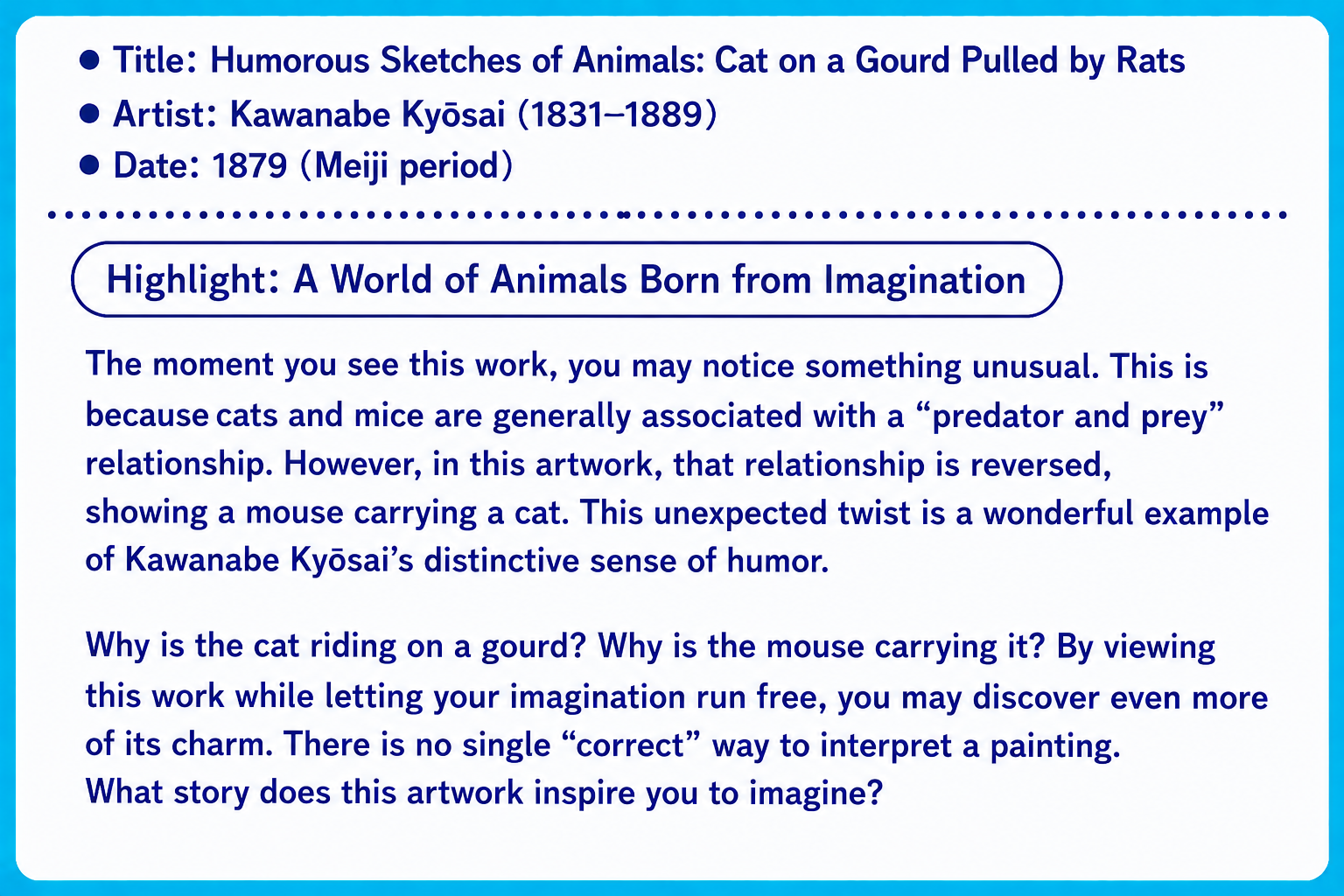
Title: Humorous Sketches of Animals: Cat on a Gourd Pulled by Rats
Artist: Kawanabe Kyōsai (1831–1889)
Date: 1879 (Meiji period)
British Museum:https://www.britishmuseum.org/collection/object/A_1881-1210-0-1858
Highlight: A World of Animals Born from Imagination
The moment you see this work, you may notice something unusual. This is because cats and mice are generally associated with a “predator and prey” relationship. However, in this artwork, that relationship is reversed, showing a mouse carrying a cat. This unexpected twist is a wonderful example of Kawanabe Kyōsai’s distinctive sense of humor.
Why is the cat riding on a gourd? Why is the mouse carrying it? By viewing this work while letting your imagination run free, you may discover even more of its charm. There is no single “correct” way to interpret a painting. What story does this artwork inspire you to imagine?

■ Summary
The three works introduced here are all examples of Japanese art, yet each possesses its own unique charm.
In Katsushika Hokusai’s Under the Wave off Kanagawa ("The Great Wave"), from the series Thirty-six Views of Mount Fuji, viewers can not only appreciate the power of nature but also enjoy imagining the lives and feelings of the people caught within this dramatic scene.
In Utagawa Kuniyoshi’s Princess Takiyasha and the Skeleton Spectre, viewers can experience the culture enjoyed by people of the Edo period through ukiyo-e based on legends and stories.
In Kawanabe Kyōsai’s Humorous Sketches of Animals: Cat on a Gourd Pulled by Rats, viewers can appreciate the humor born from free imagination and the joy of creating their own stories while viewing the artwork.
Art reflects the era, culture, and values of the people among whom artists lived. By learning a little about the background of a work, a painting transforms from something simply “to be viewed” into something that connects people across time and cultures.
We hope you’ll take this opportunity to discover the joy of Japanese and international art, and experience new discoveries and cross-cultural understanding through these works.
※ 詳細は各公式ホームページをご覧ください
※ Please check the official websites for the latest information.
東京/Tokyo
大阪/Osaka