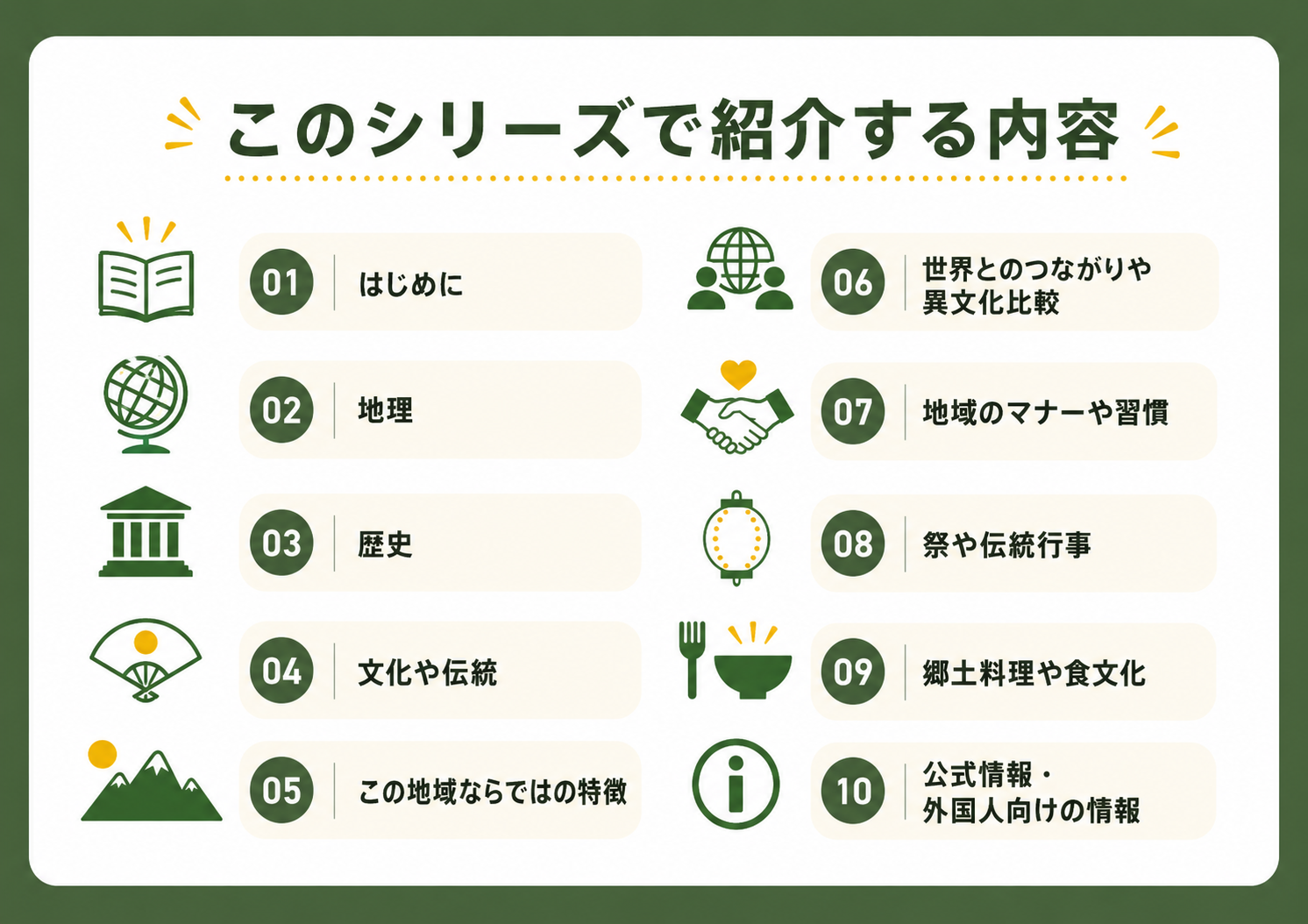
■ Topics covered in this series
01:Introduction
02:Geography
03:History
04:Culture and traditions
05:Unique characteristics of the region
06:Global connections and cross-cultural comparisons
07:Local manners and customs
08:Festivals and traditional events
09:Local cuisine and food culture
10:Official information and resources for international residents
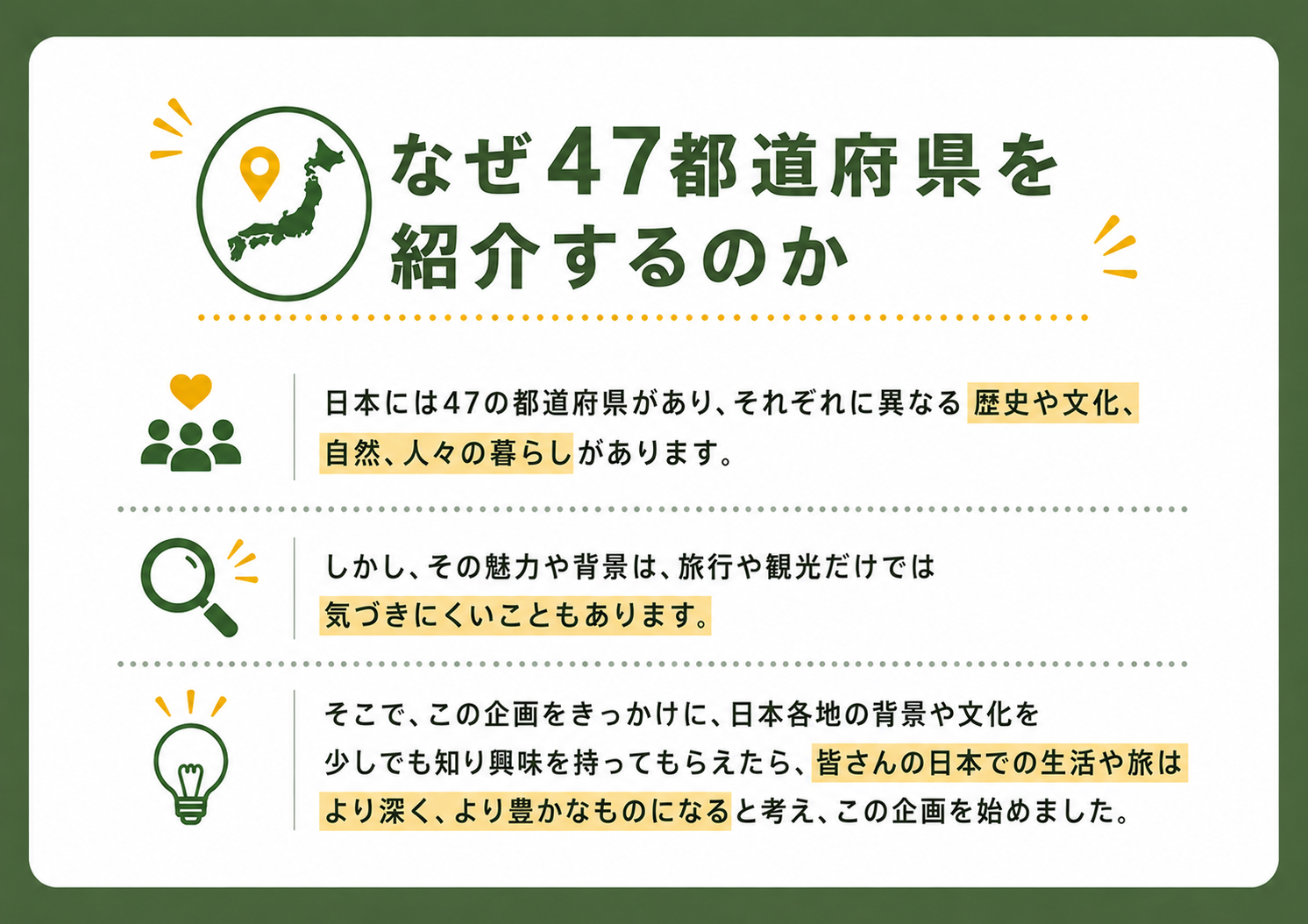
■ Why are we introducing all 47 prefectures?
Japan is made up of 47 prefectures, each with its own unique history, culture, nature and way of life. However, it is not always easy to discover the hidden charms and stories behind each region through travel and sightseeing alone.
Through this series, we hope you will gain a deeper understanding of the background, culture and characteristics of different regions across Japan, and develop a greater interest in them. We believe this will make both your life in Japan, and your travels throughout the country more meaningful and enriching.
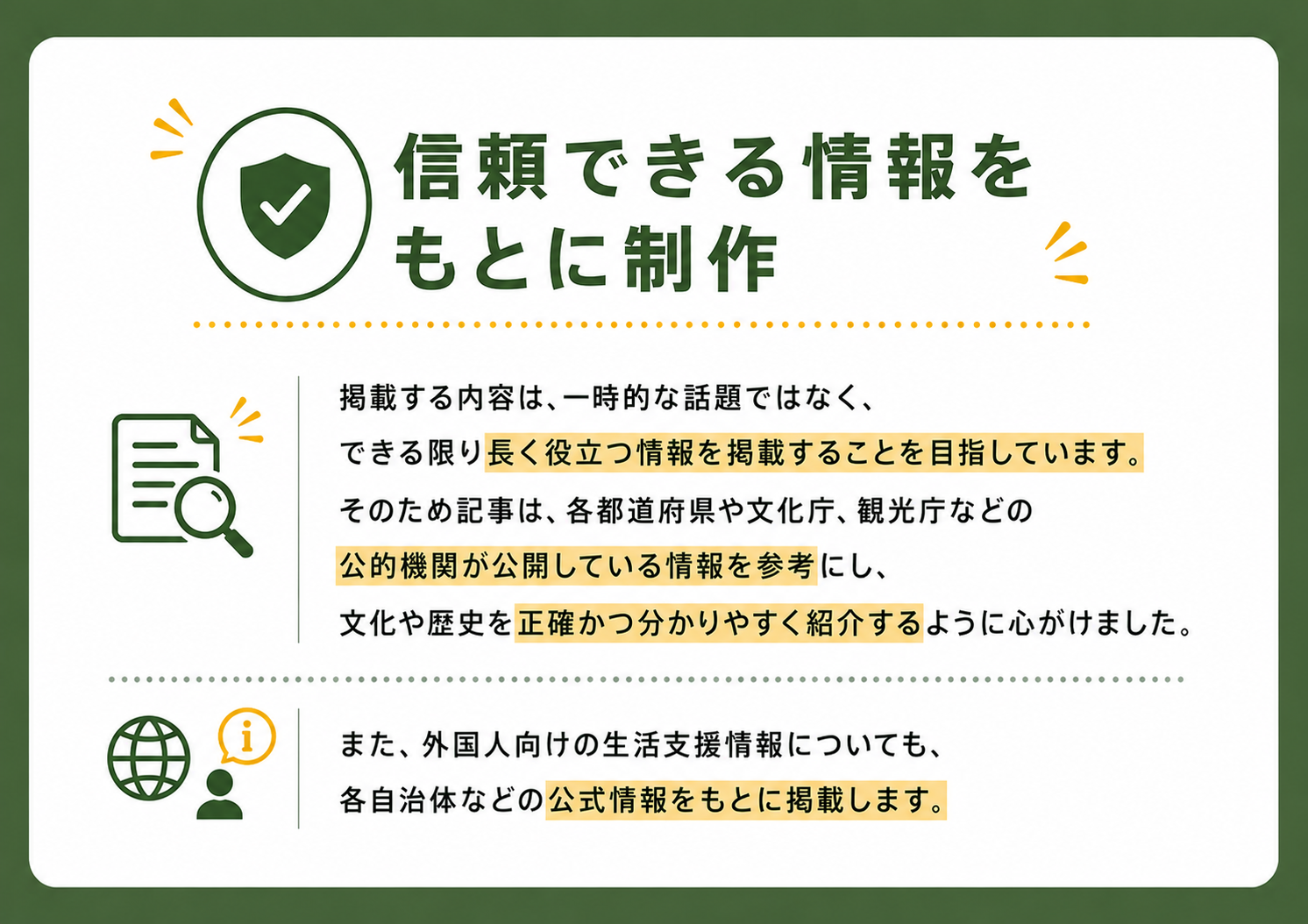
■ Based on reliable sources
The content in this series is created with the goal of providing information that remains useful over time, rather than focusing on temporary trends or topics. To ensure accuracy, each article is based on information published by official sources, including prefectural governments, the Agency for Cultural Affairs, and the Japan Tourism Agency. We strive to introduce Japan's culture and history in a way that is both accurate, reliable and easy to understand.
In addition, information to support foreign residents in their daily lives is based on official resources provided by local governments and other public organizations.
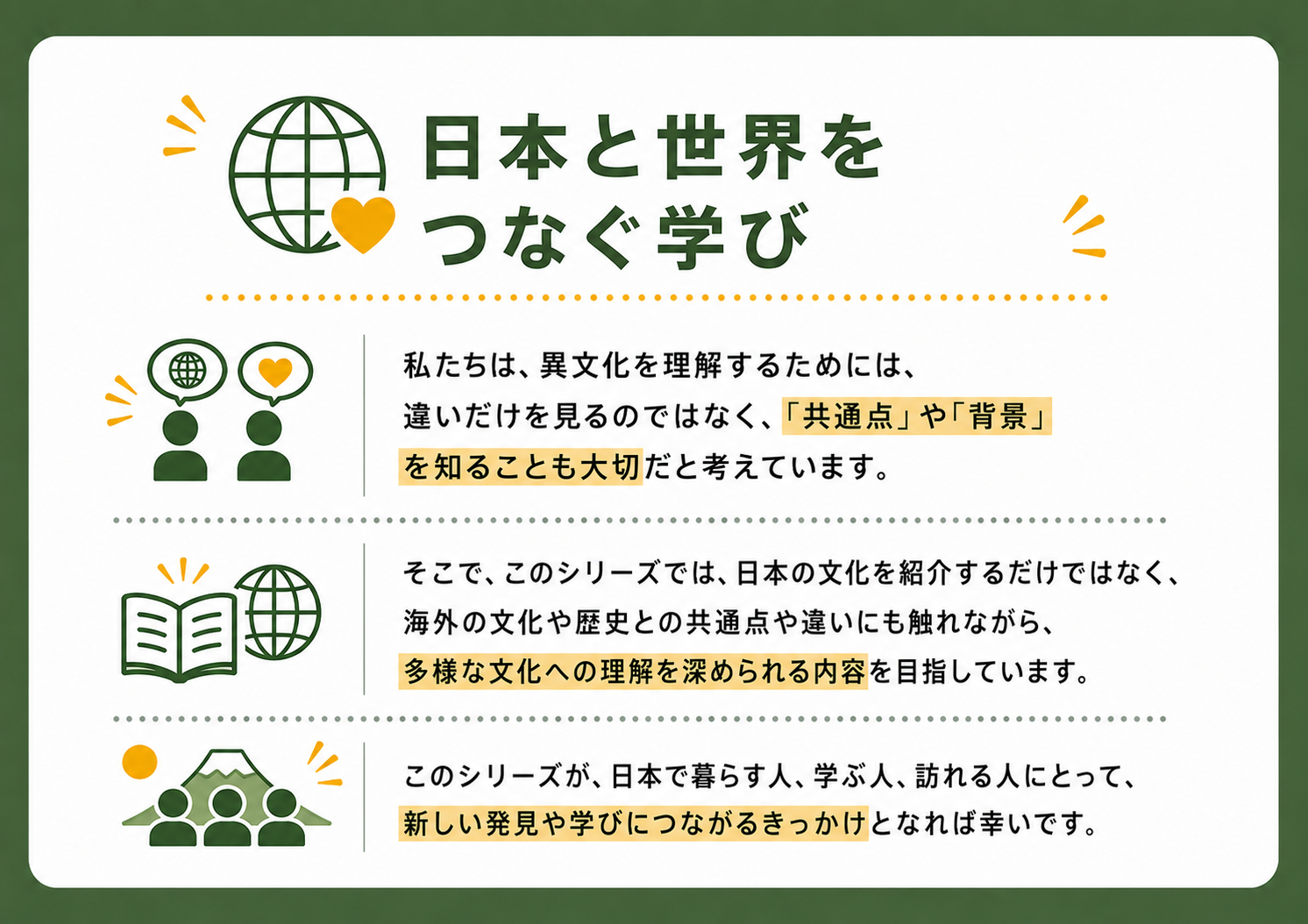
■ Learning that Connects Japan with the World
We believe that understanding different cultures is not only about recognizing their differences, but also about discovering shared values and perspectives, as well as learning about the historical and cultural backgrounds that have shaped them.
Through this series, we aim not only to introduce Japanese culture, but also to explore its similarities and differences with cultures and histories from around the world. By doing so, we hope to help readers develop a deeper understanding and appreciation of cultural diversity.
We hope this series will become an opportunity for new discoveries and meaningful learning for everyone who lives in, studies in, or visits Japan.
クロスザボーダー編集部
日本在住の全ての外国人のために様々な有益な情報をまとめたサイトをオープンしました。アルバイトや就職情報はもちろんのこと、日本での生活の安定・安心・安全に繋がる基盤情報や、より日本での生活を充実してもらうようための様々な情報を提供しております。一つでも多くの有益な情報を提供することで、皆さんの選択肢が増え、より豊かな日本での生活を送ってもらうことをサポートいたします。
https://www.crosstheborder.biz/