■ Self-Introduction
မင်္ဂလာပါ (Mingalabar:Hello )
My name is Thiri Zin Myint Phyu and I am a first-year MBA student at Keio Business School (KBS), Graduate School of Business Administration, Keio University.
I was born and raised in Myanmar, a country full of diversity, different languages, religions, and festival traditions depending on the region. Because of that, I’ve always been naturally curious about other cultures and tend to observe them closely wherever I go.
When it comes to Japan, I’ve always wondered: Why does Japanese culture attract so many people from around the world?
On this tour, I had the chance to experience Mt. Fuji through Katsushika Hokusai’s famous “Thirty-Six Views of Mount Fuji.” Seeing Mt. Fuji through his artwork helped me feel the depth and many layers of Japanese culture in a new way.
In this article, I’d love to share what I discovered and why I recommend this tour so much.
■ The Most Memorable Part of This Tour: The Hokusai Special Train
※ Mishima Station → Fujinomiya Station (45 minutes)
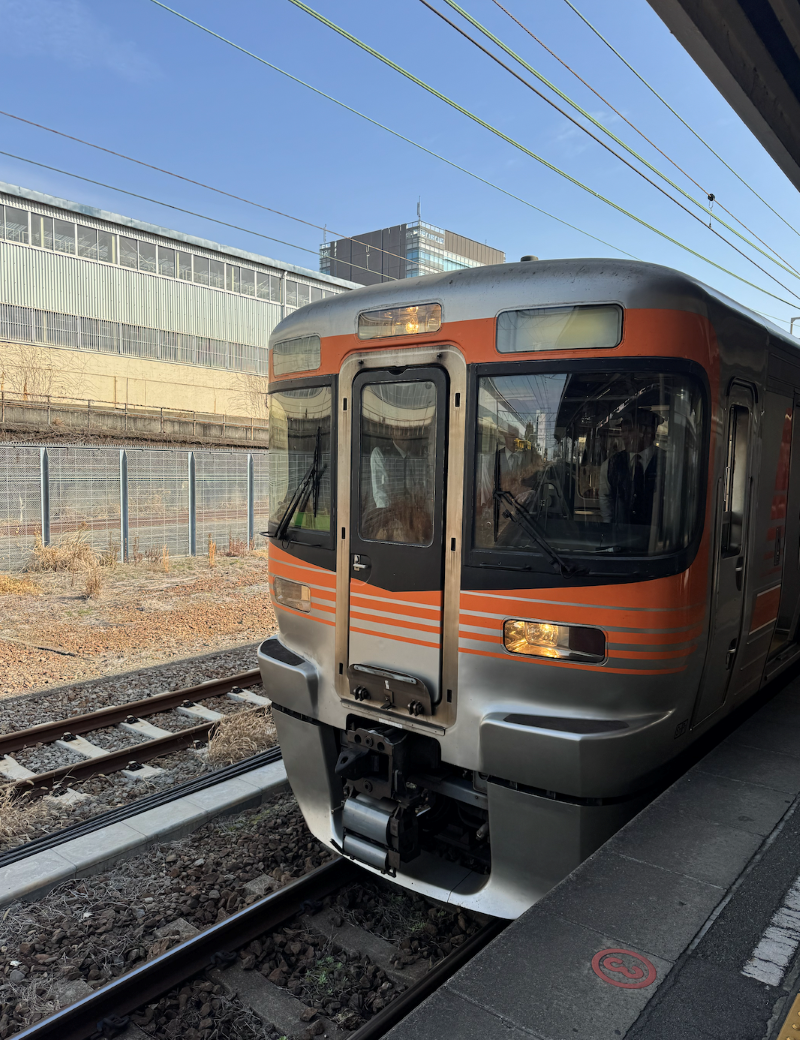
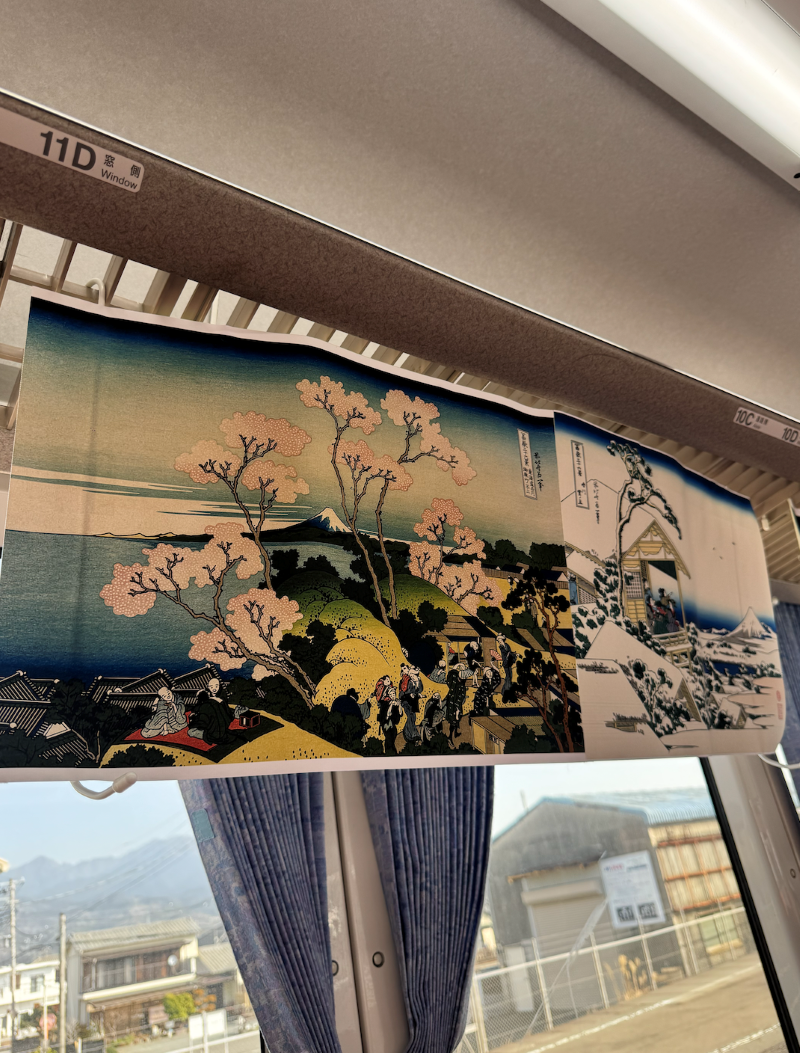
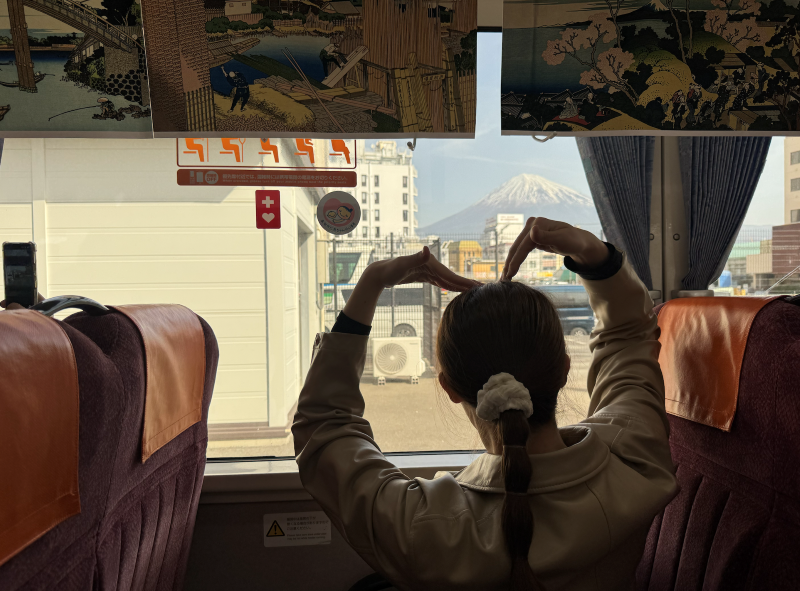
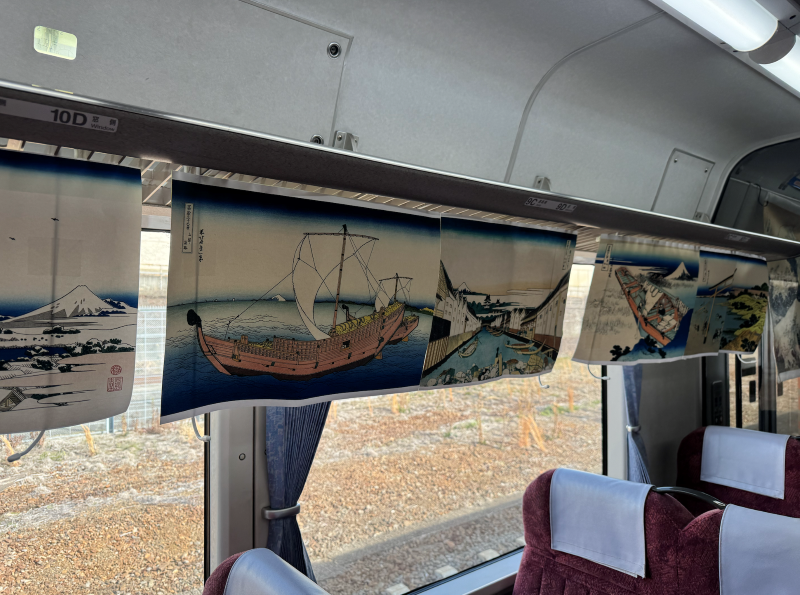
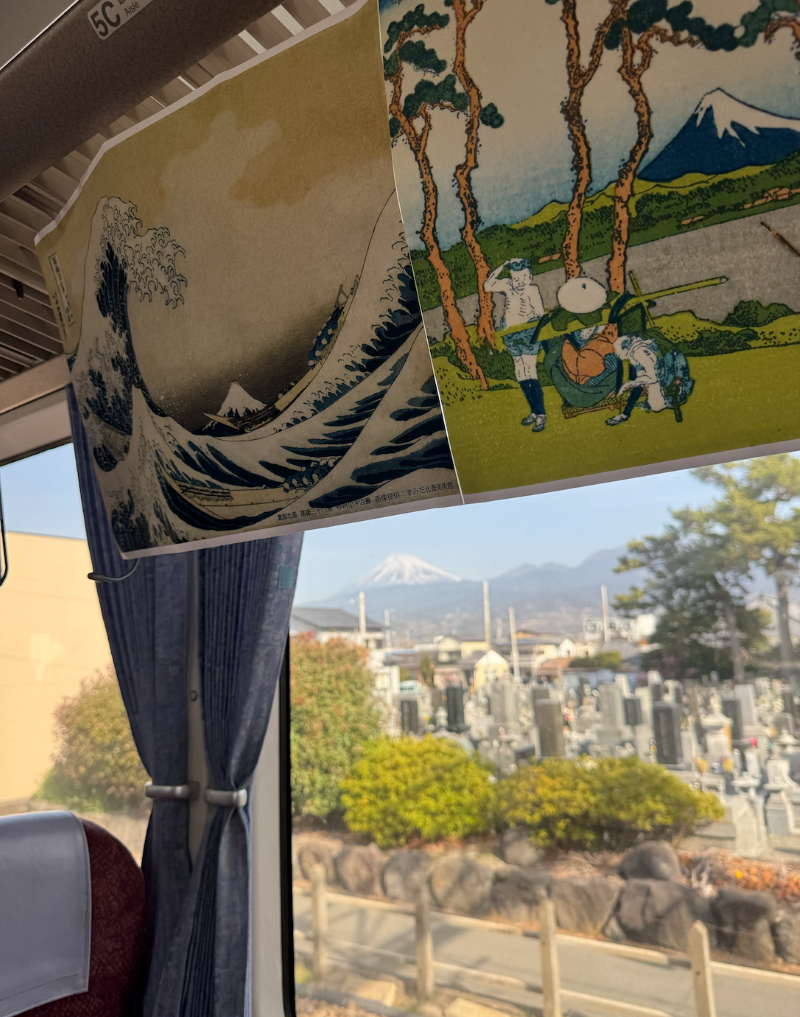
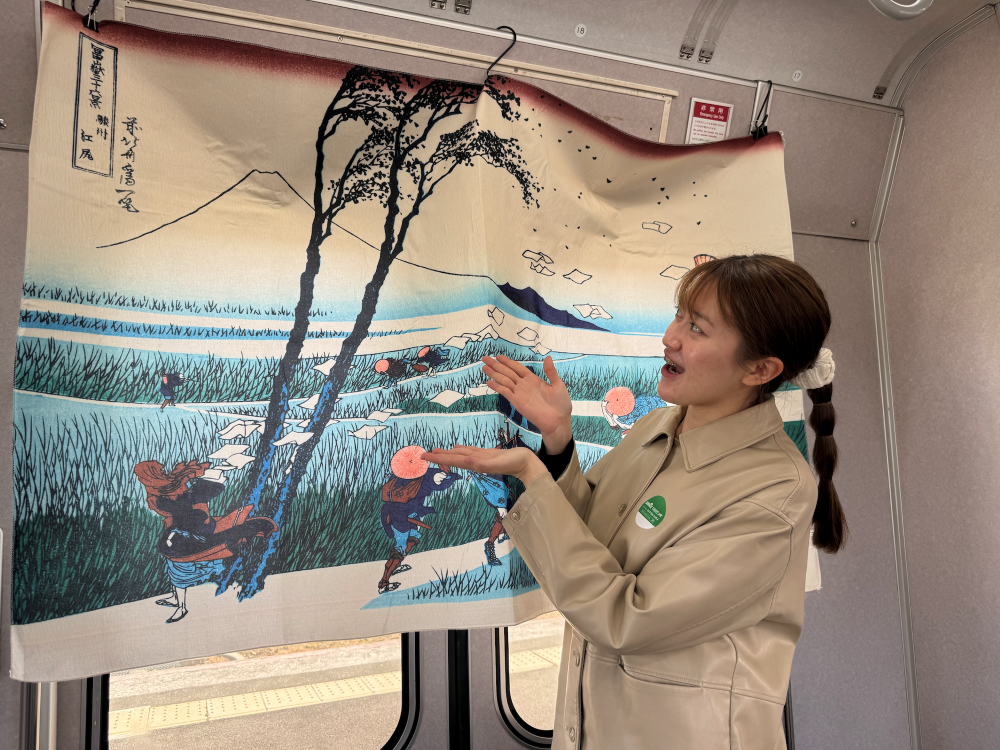
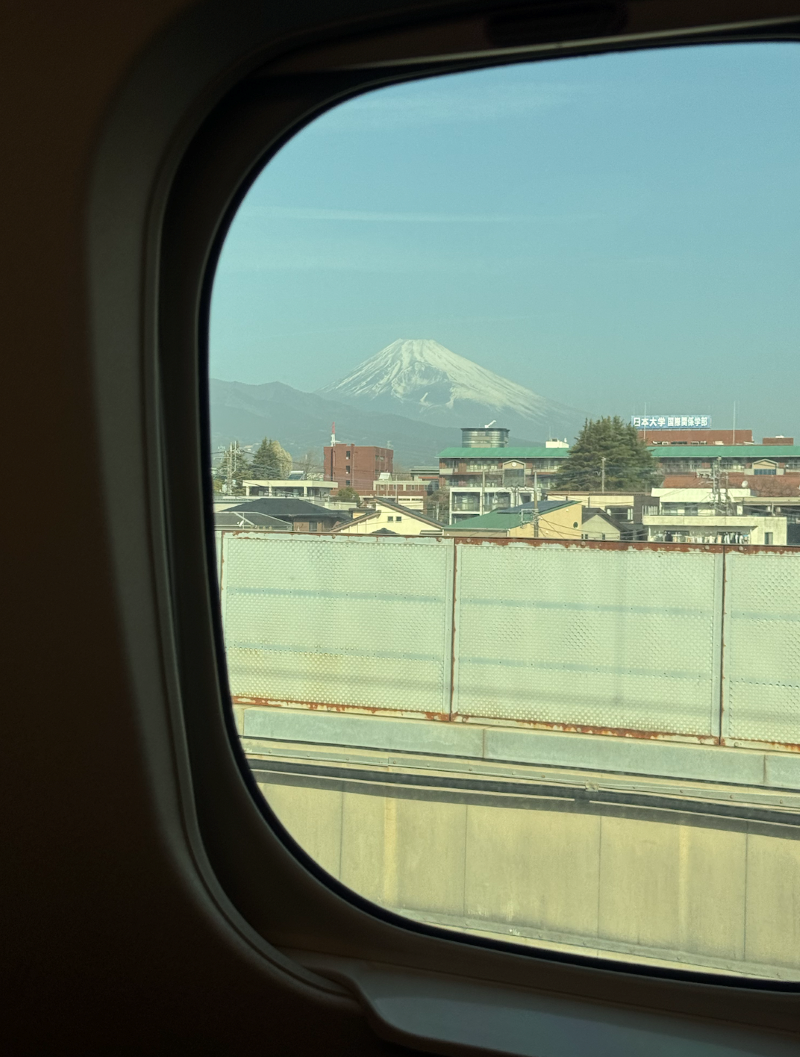
The most unforgettable moment of this tour was riding a special train decorated with Katsushika Hokusai’s iconic “Thirty-Six Views of Mount Fuji” while seeing the real Mt. Fuji outside the window.
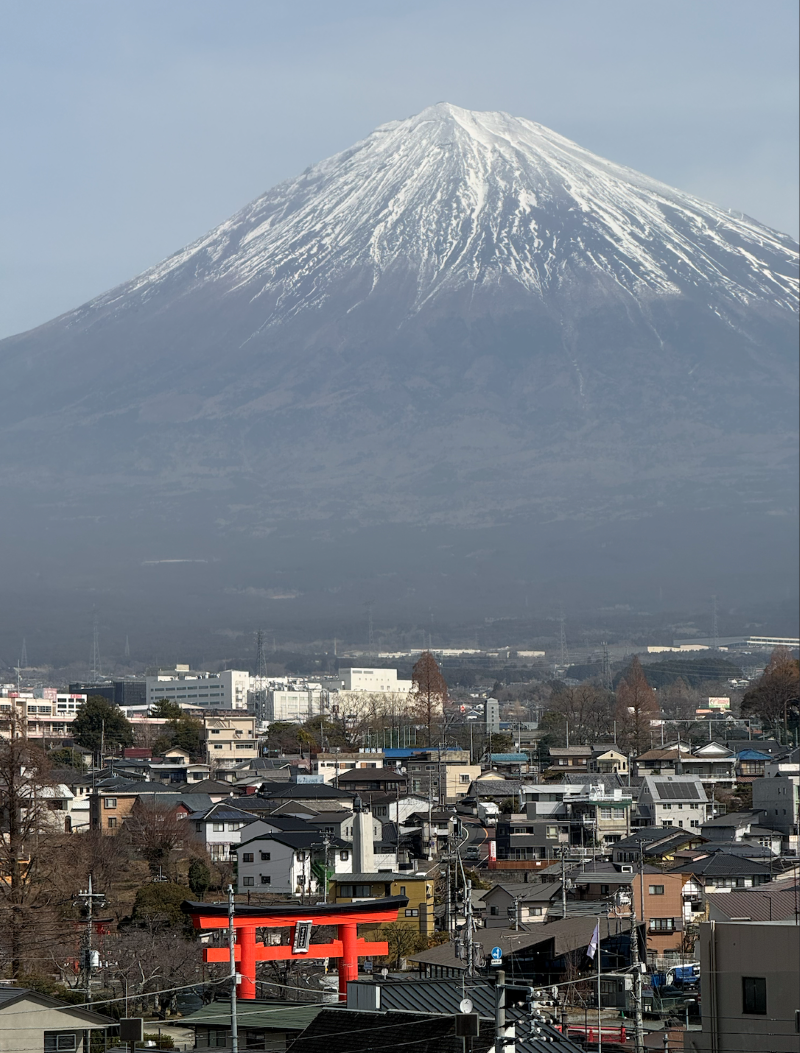
As the train moved through Shizuoka, I saw Mt. Fuji appear in almost the exact same angle as in some of Hokusai’s famous works known as the “Suruga Fuji” series, including :
・「Fugakusanjuurokei Sunshuukatakurachaennofuji」
・「Fugakusanjuurokei Sunshuuoonoshinden」
At that moment, I didn’t feel like I was just looking at a mountain. It felt as if I was sharing the same view that Hokusai once saw centuries ago.
Looking up at the same mountain across hundreds of years — that’s something you can’t experience in a museum. Until this tour, I used to think tradition was mainly about preservation. But after riding the Hokusai Special Train, I realized something different: tradition isn’t just something to protect and store away. It can be reinterpreted, re-experienced and transformed into a living story for modern times.
The train itself became a moving gallery, a space where traditional art and modern technology blended together.
It made me feel that this kind of cultural experience is something uniquely Japanese.
【References】
・Katsushika Hokusai
・Fugakusanjuurokei
■ Tour Overview (1-Day Trip from Tokyo)
This is a full-day tour departing from and returning to Tokyo, perfect if you want to experience Mt. Fuji and Shizuoka in just one day.
Schedule:
・08:00 AM – Meet at Tokyo Station
・Travel to Mishima Station by Tokaido Shinkansen
(about 53 minutes)
・Ride the Hokusai Special Train
(Mishima → Fujinomiya / about 45 minutes)
・Visit the Mt. Fuji World Heritage Center
(about 50 minutes)
・Explore Fujisan Hongu Sengen Taisha Shrine
(about 20 minutes)
・Walk around Shiraito Falls & Otodome Falls
(about 30 minutes)
・Lunch (about 50 minutes)
・Visit a wasabi farm & try grating fresh wasabi
(about 30 minutes)
・Around 5:00 PM – Arrive back at Tokyo Station
(Tour ends)
※ For more details, please check the official website:Mt. Fuji & Shizuoka Wasabi Farm Tour with Hokusai Special Train & Shinkansen (Round Trip from Tokyo)
■ Other Recommended Spots
① Mt. Fuji World Heritage Center
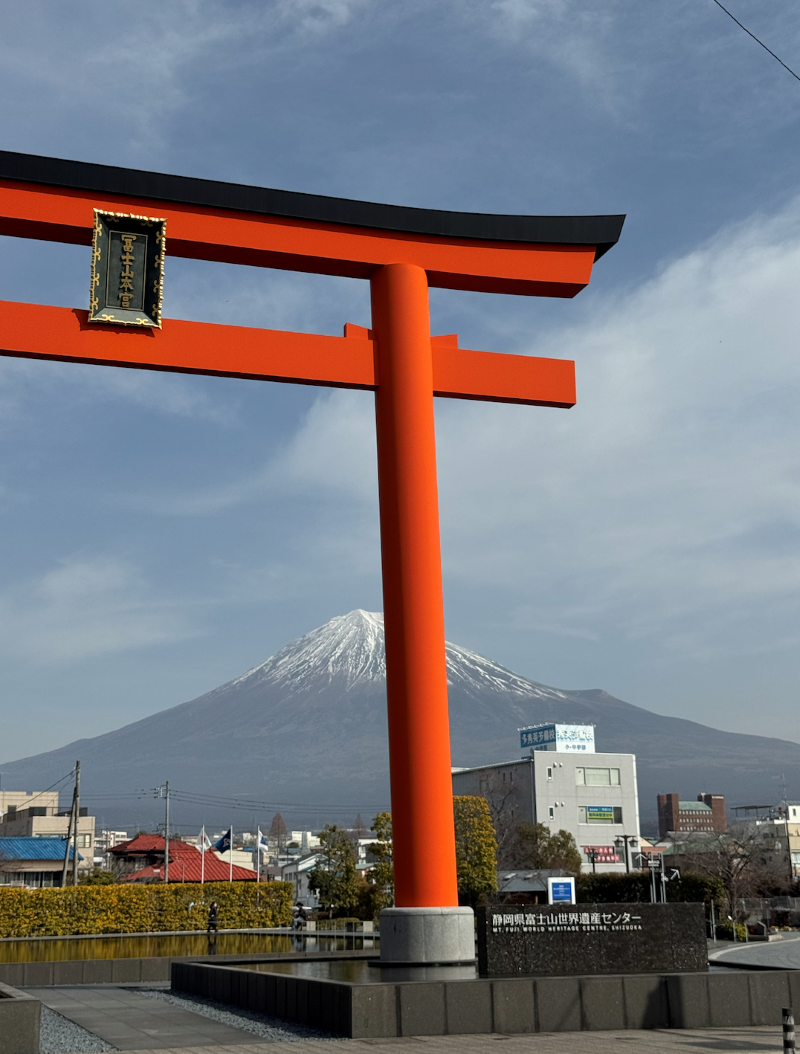
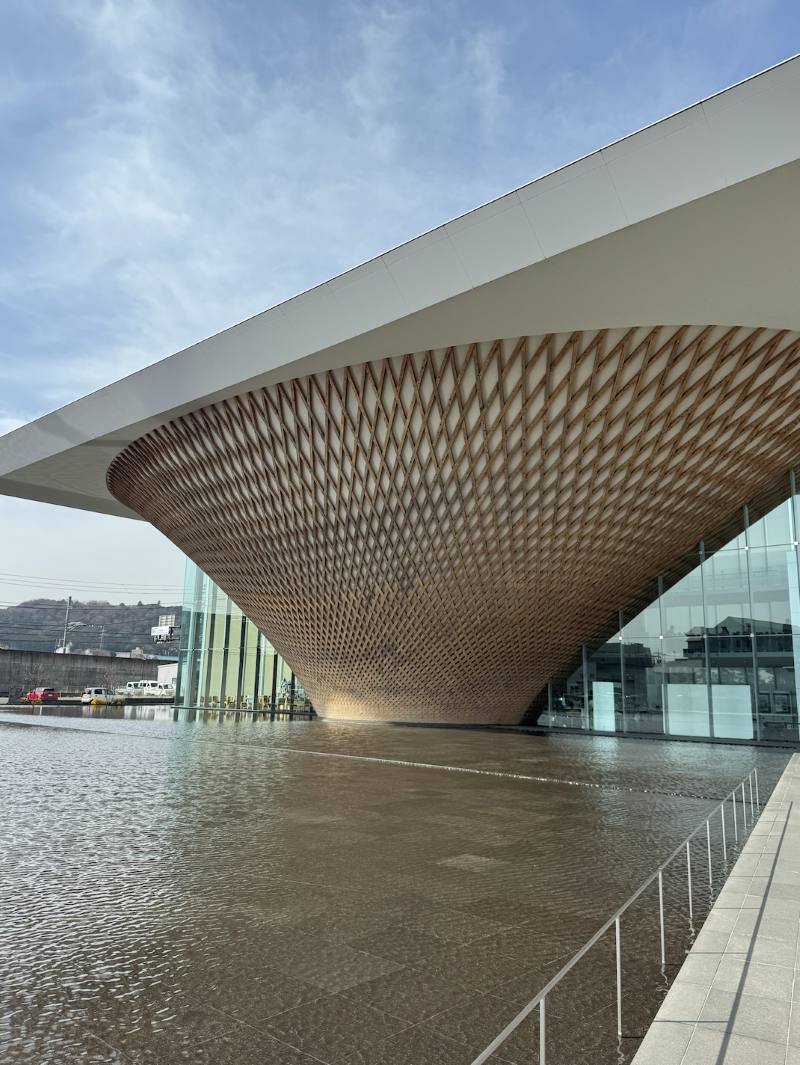
What makes Mt. Fuji World Heritage Center special is because it’s not just a sightseeing spot, it’s a place where you can experience Mt. Fuji’s nature, culture and spiritual significance in a multidimensional way.
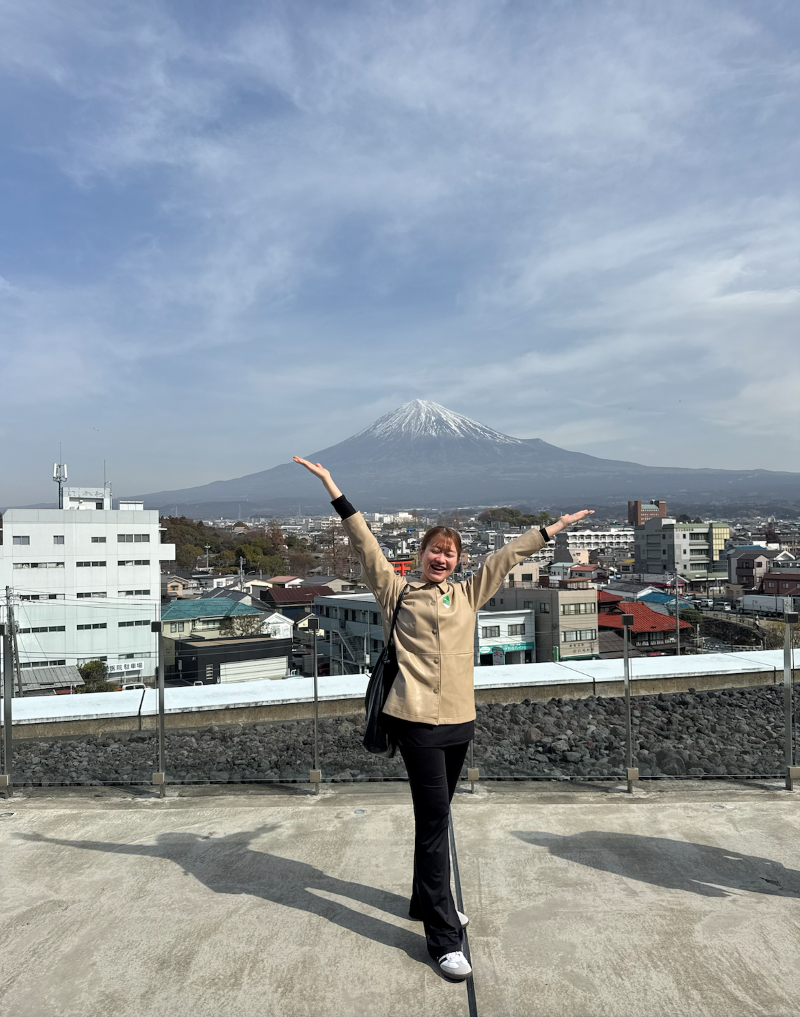
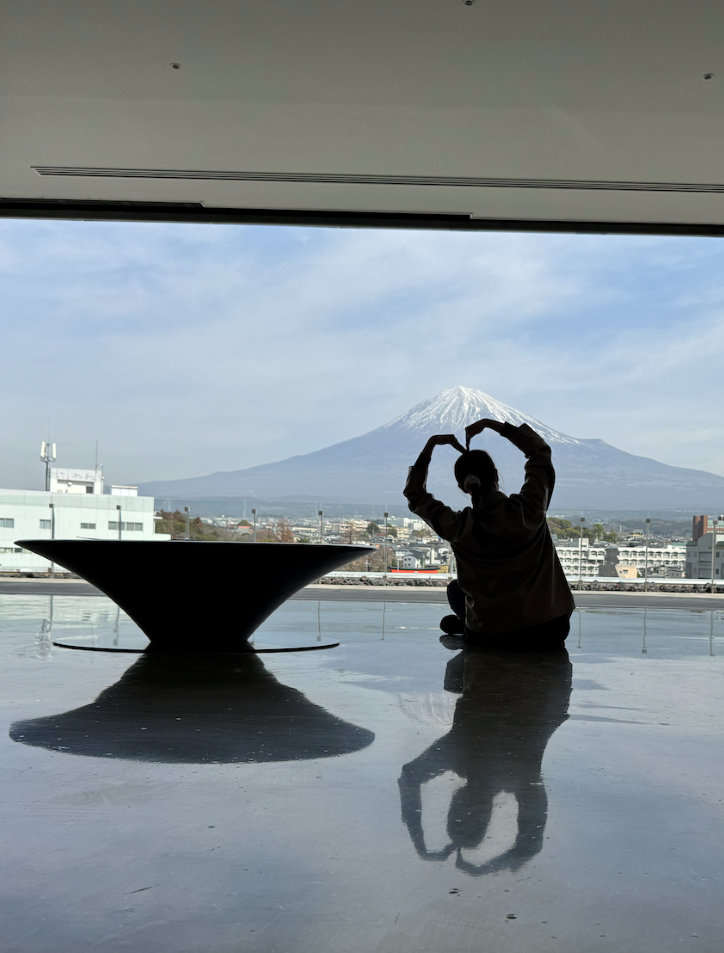
The view of Mt. Fuji from the rooftop terrace left the strongest impression on me. From there, I could see the mountain from almost the same perspective as Katsushika Hokusai’s ukiyo-e prints and historical materials. Seeing the real Mt. Fuji from that angle felt surreal, it was the moment that truly captured my heart during this tour.
The building itself is designed in a unique inverted cone shape. As you walk upward through the exhibitions, you gradually ascend, almost as if you’re climbing Mt. Fuji in a short amount of time. The space is designed not only to show beautiful scenery but to make you feel the presence of the mountain with all five senses.
As someone deeply interested in spatial design and experience design, I found this place incredibly inspiring.
② Fujisan Hongu Sengen Taisha Shrine
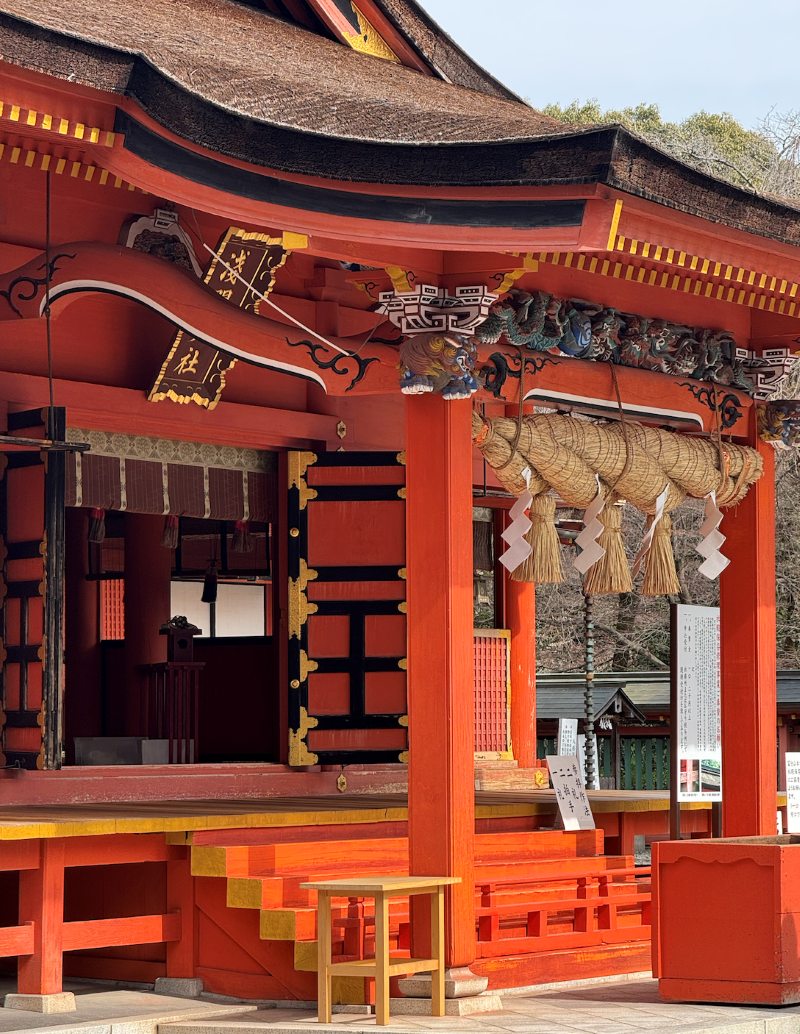
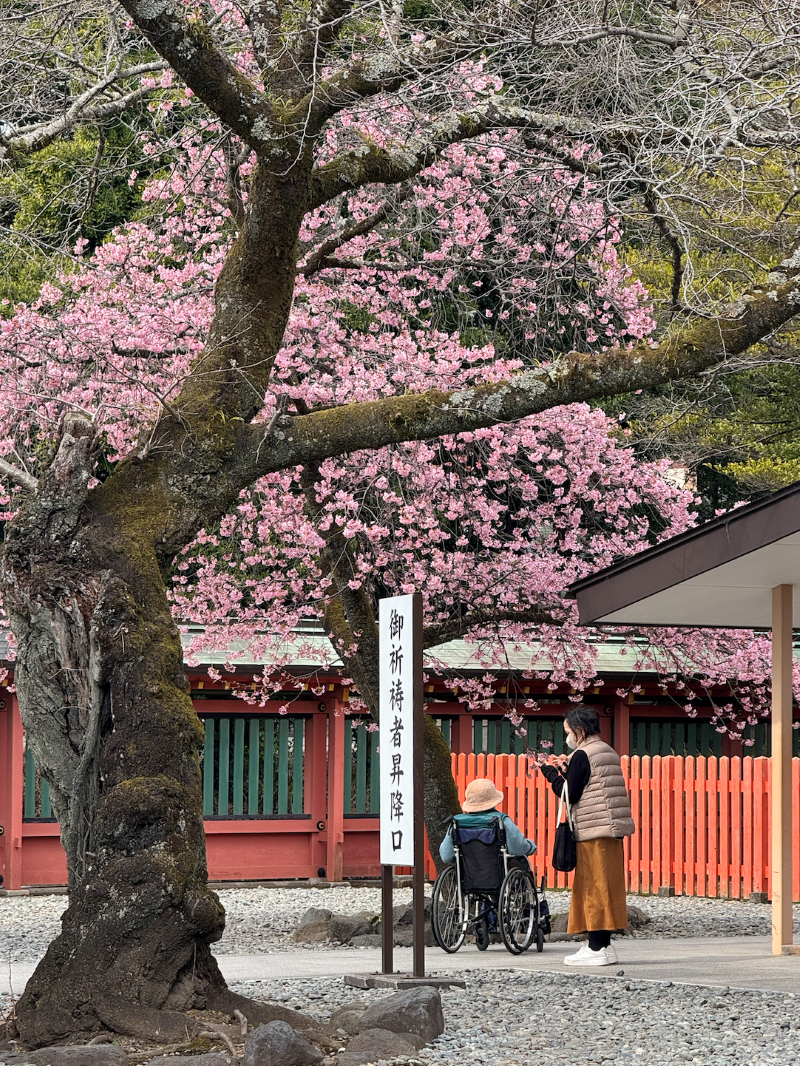
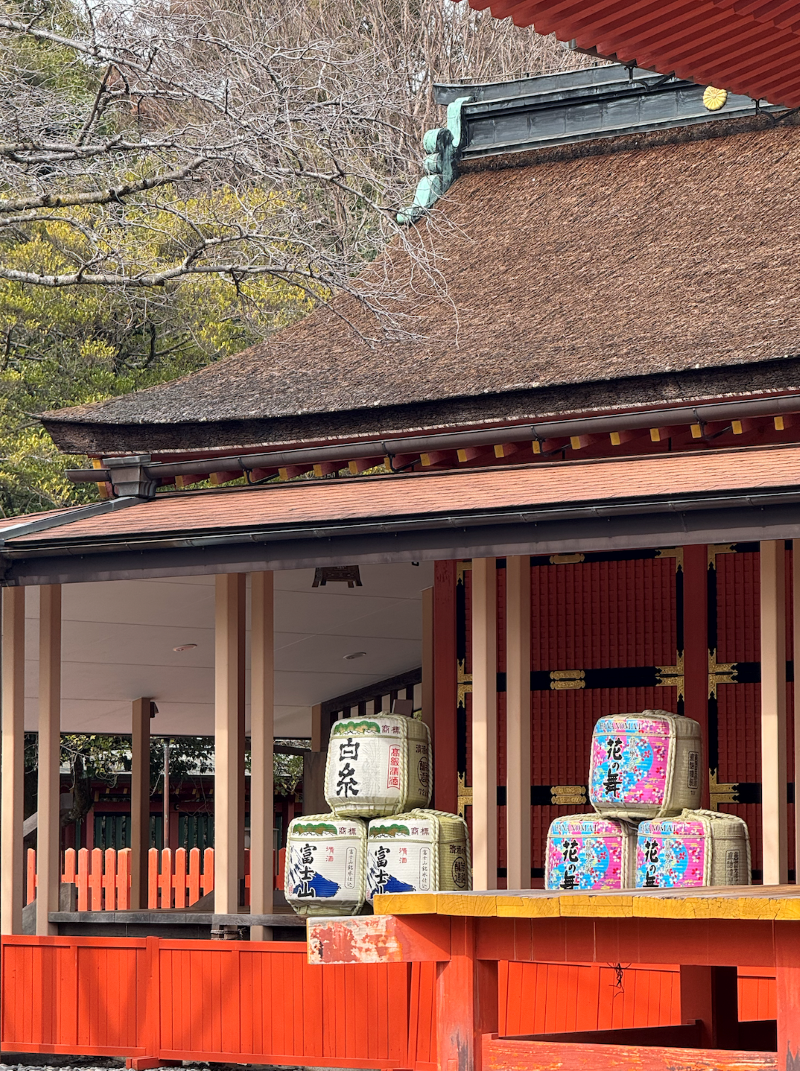
The beauty of Fujisan Hongu Sengen Taisha lies not only in its scenery but in the deep connection between nature and faith.
Interestingly, Myanmar also has a sacred mountain similar to Mt. Fuji. Mount Popa, a pilgrimage site for many people. What both places share is the idea that nature itself is sacred, and that mountains are given deep spiritual and cultural meaning over time.
Because of this, I felt that for people from cultures that value the connection between nature and spirituality, this shrine feels familiar and emotionally close even on a first visit. It’s not just a tourist stop but a place where you can quietly feel something deeper.
③ Shiraito Falls & Otodome Falls
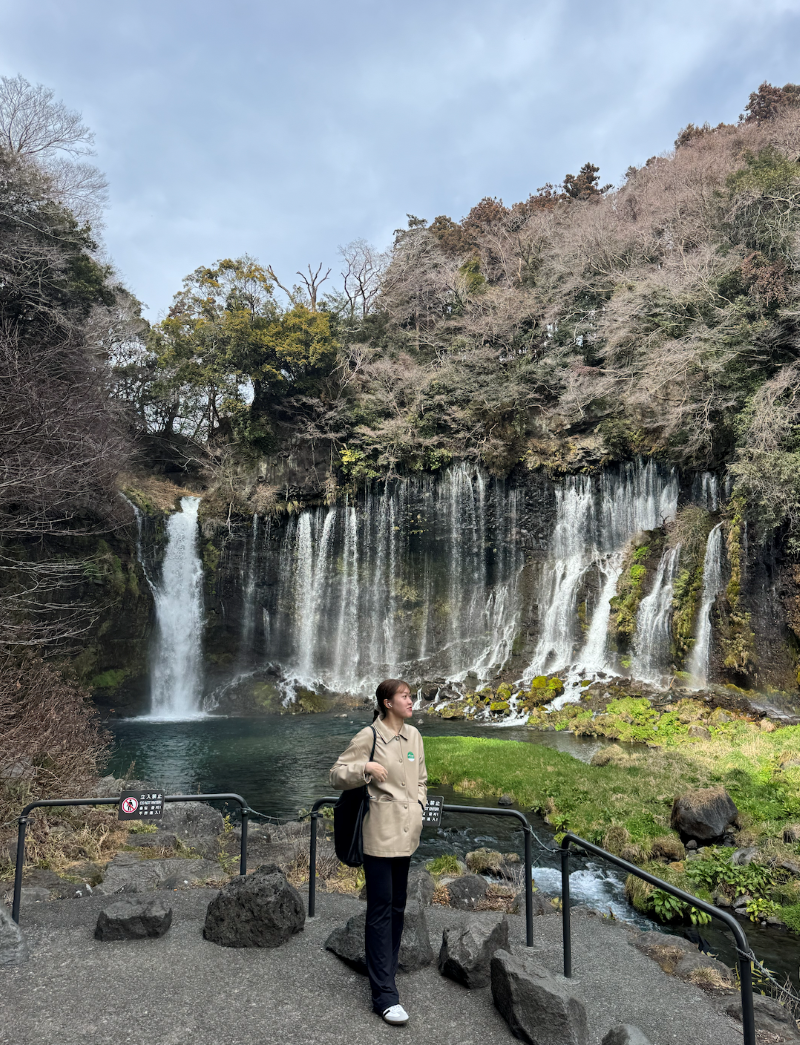
What I appreciated about Shiraito Falls and Otodome Falls is how accessible and thoughtfully maintained they are. The walking paths are well developed, making it easy and safe for anyone to visit.
For comparison, one of Myanmar’s most beautiful waterfalls, often called one of Southeast Asia’s most stunning, is quite difficult to access. Getting there requires effort and planning.
In contrast, here in Japan, observation decks and flat walking paths allow visitors of all ages and physical abilities to enjoy the waterfalls comfortably.
What impressed me even more is how tourism infrastructure has been developed without damaging the natural beauty or sacred atmosphere of the area. Globally, it’s rare to see such a careful balance between nature preservation and tourism yet in Japan, it feels almost natural and effortless.
Visiting these waterfalls once again deepened my respect for Japan’s approach to environmental conservation.
④ Wasabi Farm
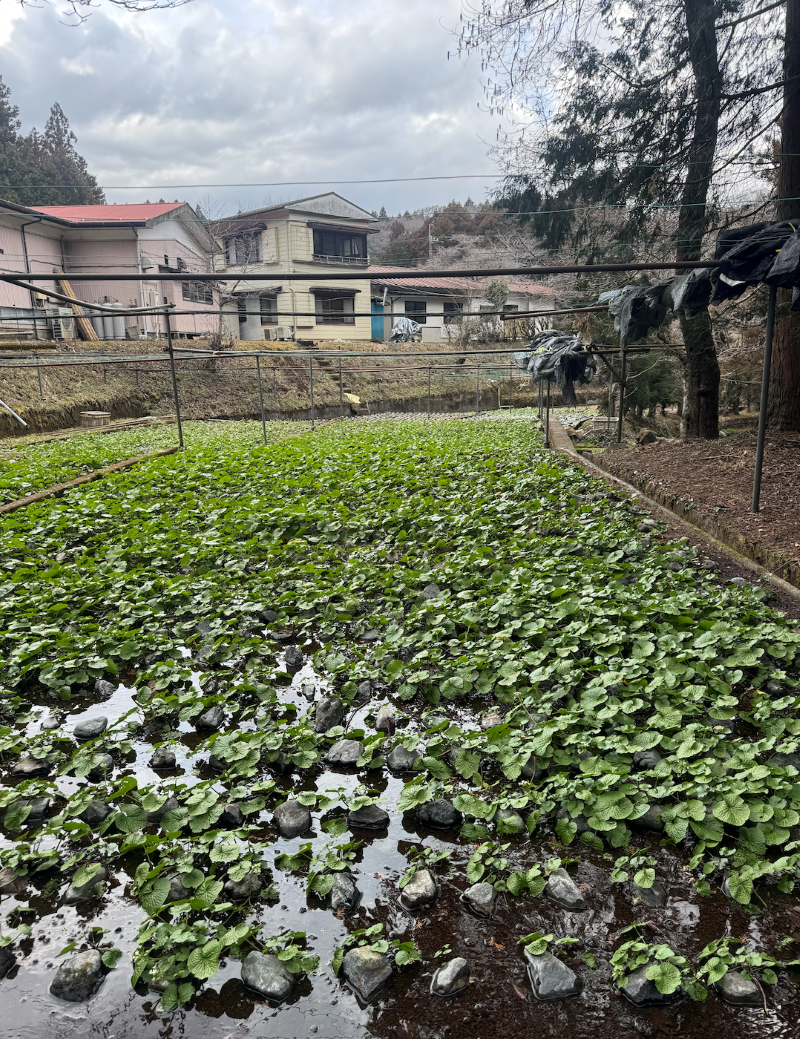
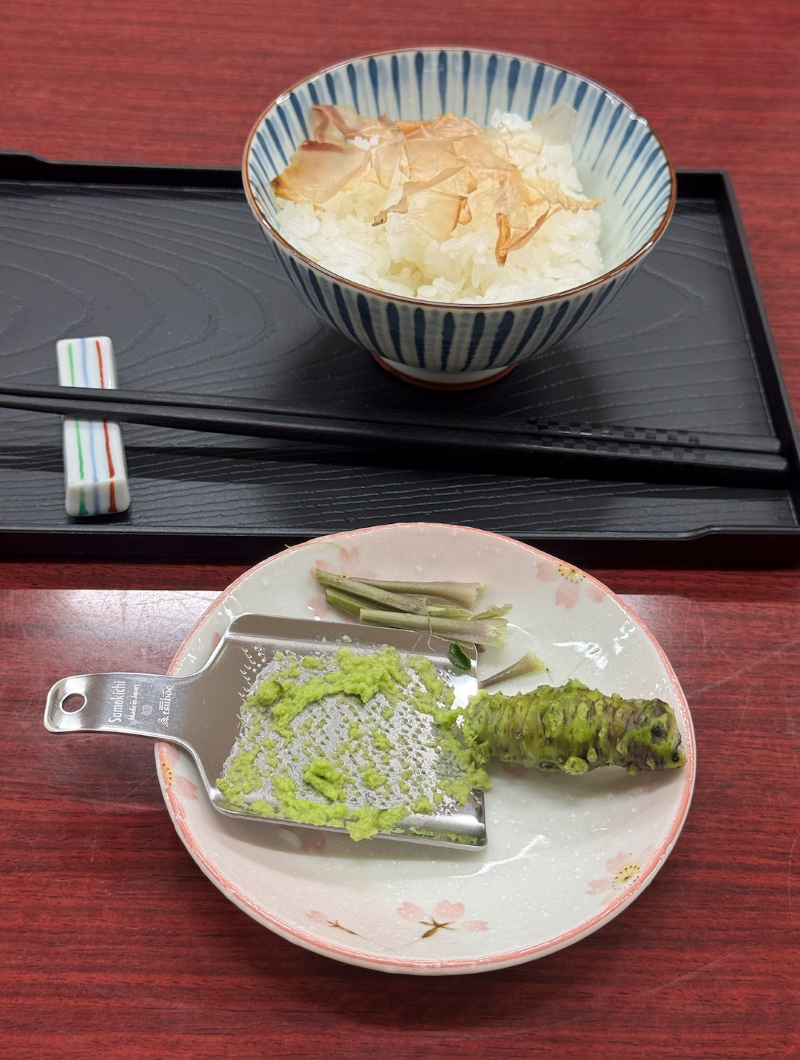
The charm of visiting a wasabi farm lies in experiencing traditional cultivation methods in harmony with nature and even trying freshly grated wasabi yourself.
The farm we visited grows “Mazuma Wasabi,” considered one of the highest-grade varieties in Japan and rarely found in regular markets. For chefs and food lovers, this is truly a special destination.
That day, I grated fresh wasabi for the first time and enjoyed it with rice. The moment I tasted it, a refreshing sharpness followed by a surprisingly deep sweetness spread through my mouth. It completely changed my understanding of what wasabi could be.
It wasn’t just spicy, it was complex, elegant and unforgettable.
■ Tips & Advice for Joining the Tour
★ Wear comfortable clothes and shoes
You’ll be walking quite a bit during this tour.
At places like Shiraito Falls, Otodome Falls and the wasabi farm, some paths can be wet or slippery due to water spray and moisture. Waterproof shoes or comfortable sneakers are highly recommended.
★ Learn a little about Mt. Fuji and Fugakusanjuurokei beforehand
Even a small amount of background research will greatly deepen your understanding of the scenery and historical sites. It truly multiplies the value of the experience.
★ Bring cash
Some locations on the tour accept cash only.
If you usually rely on digital payments, make sure to prepare some cash in advance.
■ Conclusion
At the beginning, I mentioned a question I’ve always had:
Why does Japanese culture attract so many people around the world?
This tour gave me one possible answer.
Seeing Mt. Fuji across time on the Hokusai Special Train, learning about its history and spiritual meaning at the World Heritage Center and Fujisan Hongu Sengen Taisha and experiencing the harmony between nature and daily life at the waterfalls and wasabi farm I realized something important.
The charm of Japanese culture is not simply that it is “beautiful.” It lies in how nature, faith, art, and food are all connected as one continuous story, a story that is still alive and experienced today.
In the future, I hope to use this experience as a starting point to build a business that strategically shares the beauty and depth of Japan with the world.
As I continue exploring this question, I aspire to grow into someone who can serve as a bridge connecting the value of Japanese culture to the world.
Thank you very much for reading until the end.
※If you’re interested in the “Mt. Fuji & Shizuoka Wasabi Experience Tour” introduced here, please check the official website for more details.→ Mt. Fuji & Shizuoka Wasabi Farm Tour with Hokusai Special Train & Shinkansen (Round Trip from Tokyo)